


The crescent of Ramadan this year climbs proudly to the peak of the sky. It casts the same brightness over a city that no longer has the spirit to reflect the enthusiasm it once had.
The brighter the moon grows each night, the more it exposes the sorrowful face of this city. The veil of darkness has long covered the mourning garment the city has been wearing.
The crescent was meant to shine over 72,000 citizens who would have been enjoying its cheerful glow. Now it softly casts its light on their abandoned soil.
The streets have missed the enthusiastic and joyful company of 21,000 children. They would have roamed the streets, beating cooking pots to the rhythm of familiar Ramadan songs. They have been silenced for good.
One hundred thousand homes that once outshone the moon with joy have been reduced to cracked stones. The rubble still embraces the bodies of their loved ones beneath it. And hundreds of thousands of people have been helplessly displaced.
The war has dimmed all the festive signs, and the city that was once lively has become plain and hollow. With only a few scattered, flickering glimmers of hope, the city now faintly glows amid nights consumed by fear and uncertainty.
As people drift from door to door, desperately seeking help or refuge, the holy month arrives to remind those burdened with worry of God’s gate, always open to all. Its long-awaited arrival carries promises of relief and contentment.
Ramadan is the long-awaited guest.
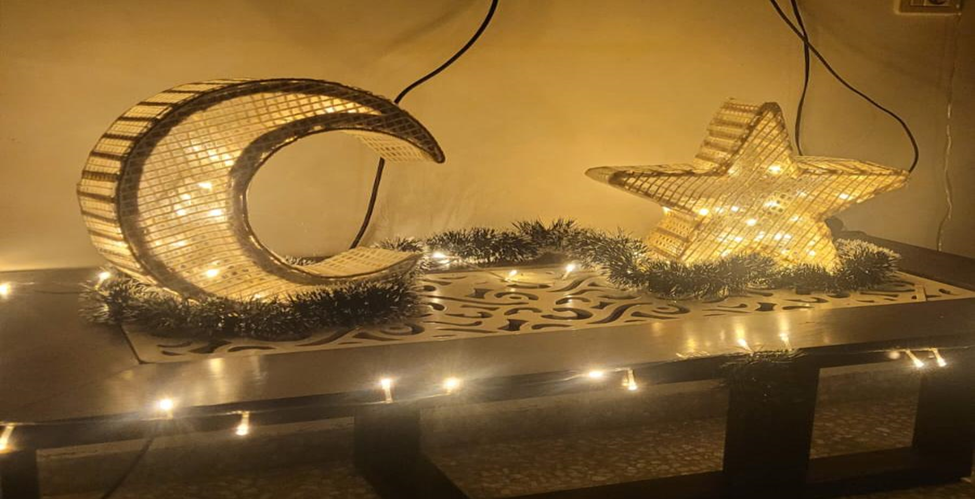
This time, with only the simplest signs of joy and decoration, people welcome this visitor who knocks on their doors once a year. There were times when it was welcomed from the shining windows of their homes, with Ramadan lights dangling from balconies and lanterns casting moonlit sparks across the starry sky.
Now, from tents or partly damaged homes, Ramadan lights a single lantern—a flame of hope in the darkness they have endured for more than two and a half years.
Ramadan extends beyond fasting and restraint. It is cherished for the inward message it carries. Fasting is more than abstaining from worldly desires—food and drink. It also requires abstaining from bad deeds and foul language. It teaches a way of life built on patience, charity, goodness, and solidarity. Ramadan comes this year to revive these deep-rooted traditions that war may have shaken. And with the first breaking of the fast, the mind is refreshed and strength is restored, as the first drop of water wets the throat, easing the hardship of the long day.
The spiritual side is the heart of the holy month.
After breaking their fast at iftar and satisfying their hunger, souls remain thirsty for spiritual nourishment—the very essence of Ramadan. People head to the mosques for the Isha prayer and for the special Ramadan night prayer—Tarawih—which shapes the atmosphere of the entire month. Men, women, and children crowd the halls. The call to prayer rises, echoing in the sky, and all stand in equal lines before the Almighty, while silence and awe prevail over the whirring drones.
The imam, who leads the prayer in the mosque, steps forward and guides tangled hearts heavy with wounds and unspoken pain. He begins reciting verses from the Qur’an in a melodic voice. It lifts spirits as though gently patting weary backs.
Later, in the final Witr prayer, the imam raises his trembling hands in supplication and, with a trembling voice, begins to pray, as the entire hall slowly loses its composure. Beards grow wet with tears, while others bury their faces in their open hands. Eyes are cast down to the ground as he asks God for compensation for loss, guidance for the lost, mercy and forgiveness for the martyrs, and patience for those left behind. “Amen” echoes repeatedly in one collective voice, full of awe, humility, and profound grief.
Then the worshippers kneel down—shadowy figures gently pressing their foreheads onto the ground. It is the same ground that was once littered with fragments of glass and the bloodstains of those guilty of nothing but being armed with faith.
Faith is the secret of endurance.

Even though the minarets have been cast to the ground, prayers still echo through neighbourhoods of ruins. This familiar sound is a guiding line for a city swallowed by darkness. Though the face of the city has completely changed, the call to prayer still brings a sense of existence to the two million citizens living in the shadow of the ruins.
While war may sever social ties through distance, forced displacement, and restricted movement, other bonds have strengthened. And the bond that connects people to the Divine remains unwavering.
Ramadan was once celebrated with feasts and warmly welcomed throughout its month-long stay. Today, it visits people who lack even the most basic necessities. With no refuge, many shelter along cold roadsides, entirely reliant on humanitarian aid for food, with no source of income.
Yet Ramadan still arrives—and is, remarkably, warmly welcomed.
Ramadan does not wait for the situation to improve, for food to become abundant, or for the displaced to settle. It comes to make things better, reminding people that it arrives at the right time, knowing best when it is needed most.

3 Comments
Hanan Alagha
Amazing writing, thoughts and words👏💯
Creative and wonderful .I enjoyed every single letter your hands wrote, Noor.
You truly excelled. ✨
Israa Zaqout
A wonderful and moving article that describes our situation. We ask God for relief soon and that He bless our times with goodness.
Sara
Will said 👍