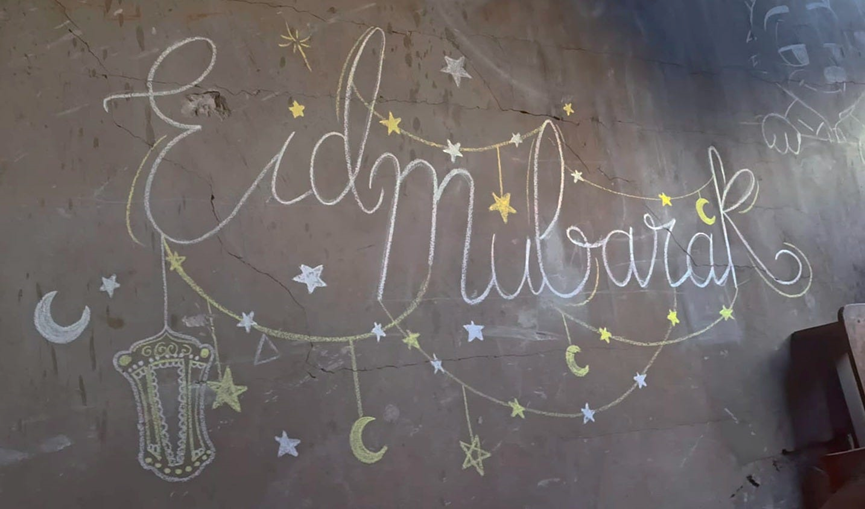
The Sound of Eid
Do you know what Eid truly sounds like?
Close your eyes for a moment and listen.
You will hear Eid before you ever see it.
Eid is a symphony, where every joy carries its own voice. It lives in the laughter of children, in their bright, beautiful clothes stitched from the colors of happiness itself. It is in the way their tiny hands clutch chocolates and sweets, Eid cookies tucked into their little patterned bags, as though they are gathering joy faster than it can slip away.
It lingers in the songs we grew up with, those familiar melodies drifting out of open shops and into the streets, wrapping the air in warmth, in memory, in something that feels unmistakably like Eid morning.
It spins in children’s laughter on the carousel, in their breathless rush to climb back on again and again, as if happiness could be chased, caught, and held still just a little longer.
And somewhere within all these sounds, between laughter, music, and sugar-sweet candy, Eid becomes more than a day on a calendar. It becomes a different kind of day altogether, one that arrives carrying something gentle, something warm, a feeling that quietly finds its way into the heart and begins to bloom there.
It fills the air with a soft kind of joy, the kind you do not have to search for because it simply surrounds you, settling into smiles, into small moments, into familiar faces. It is a day that paints happiness across everything it touches, turning ordinary streets into something brighter, and simple moments into memories we return to year after year, after all we have endured, just to feel once more that we are still alive inside it.
The Child Within Each of Us
That little girl inside me is the one speaking, the one who still sees Eid as it once was: wide, bright, and full of wonder.
From where I stand, no one experiences Eid the way children do.
I used to hear adults say this when I was a child, and I never understood it. I would wonder, with quiet confusion: does that mean they do not enjoy Eid?
No, of course not. They do. But their joy rises from the glow of the children around them, from a small laugh that slips into their hearts, from eyes that shine as if they carry all of Eid within them, from a tiny hand holding a piece of candy as if it has gained the whole world.
Eid is not truly Eid without the sight of children’s laughter and the presence of loved ones, those faces we long for, those gatherings that return us to ourselves, as if time, no matter how heavy it has made us, grows lighter when we come together.

Grief and Strength
I saw a woman on my way back from the Eid prayer.
She stood at the edge of the street, where children were gathering in their bright clothes. In her hands, she carried small bags of sweets. She called them over, one by one.
Her eyes were filled with tears. She smiled as each child approached her. She placed sweets into their hands, and though she smiled, there was a weight behind it. The children ran off laughing, their joy echoing in the air.
Later, I learned her story.
She had lost one of her children in a way no mother should ever have to endure. During the war, while displaced, in a hospital that was meant to shelter life, she lost them.
And suddenly, everything made sense.
The way her hands trembled ever so slightly. The way her eyes followed every child who walked away from her. The way she stood there, not simply giving sweets, but somehow reaching for a moment that had been taken from her.
I could not hold back my tears.
Because in that moment, it was no longer just her grief. It was all of ours.
There are many like her. Mothers, fathers, brothers, sisters, people who have lost someone and who carry that loss silently.
For some, Eid is no longer a celebration. They ask, quietly and painfully: how do we go on after losing them?
And the truth is that Eid does change. It loses a taste we once knew. It becomes quieter, heavier, a day that passes with memories pressing against the chest and images that refuse to fade.
Grief does not lessen simply because time moves forward. We do not move on from those we have lost. They remain with us in every corner of memory, in every moment that should have been shared with them. They may be absent from our sight, but never from our hearts.
We miss them in ways words cannot hold. We carry them into every Eid, every prayer, every breath.
And perhaps this is where faith meets grief: not in forgetting, but in holding sorrow and still choosing, somehow, to endure. To say Alhamdulillah even when the heart is heavy. To be patient even when the loss feels unbearable. To believe that what was taken from us has not been lost in vain.
Because we are promised that beyond this pain, beyond this absence, there is a reward greater than we can imagine.
Why Do We Celebrate Eid, Then, Amid the Rubble?
Eid is one of God’s sacred rituals. It is a gift, a blessing, a reward from Him. Why, then, would we ever diminish it or treat it lightly?
Even amid loss and sorrow, Eid reminds us of the resilience of the human heart. It is a day to honor life, to gather, and to celebrate. It teaches us that we can still find beauty in the presence of our loved ones, in our children’s laughter, in the sweetness of shared meals, and in the warmth of family and neighbors. These are themselves acts of faith and defiance, proof that life, however fragile, insists on being lived fully.
So we stand, like that mother, with trembling hands and breaking hearts, still giving, still loving, still holding on.
Our patience and gratitude transform grief into hope, reminding us that beyond the absence, beyond the pain, there is reward from God. And in that fragile strength, there is something deeply human, and something deeply sacred.
Through it all, may our hearts continue to beat with hope despite the trials. May our determination continue to shine, Gaza. May we continue to endure, and may we remain well.