



Even after the ceasefire took effect on October 10, 2025, many, including myself, still have fears that the ceasefire would not succeed. This fear comes after multiple disappointments, especially the one that was in March, when Israel broke the truce that was supposed to be permanent under several international guarantees. On the other hand, thousands of people are highly optimistic this time, believing that the war can never return.
If the war really stops or if it returns, in both cases, I will keep suffering. Even after the strikes have mostly stopped, I still do not feel mentally at peace. The sound of drones flying in the sky, the buildings collapsing, and the Caterpillar trucks are still in my mind
Each sound is a reminder.
Each harsh experience during the genocide left a trauma that can hardly be overcome.
October 18, 2023
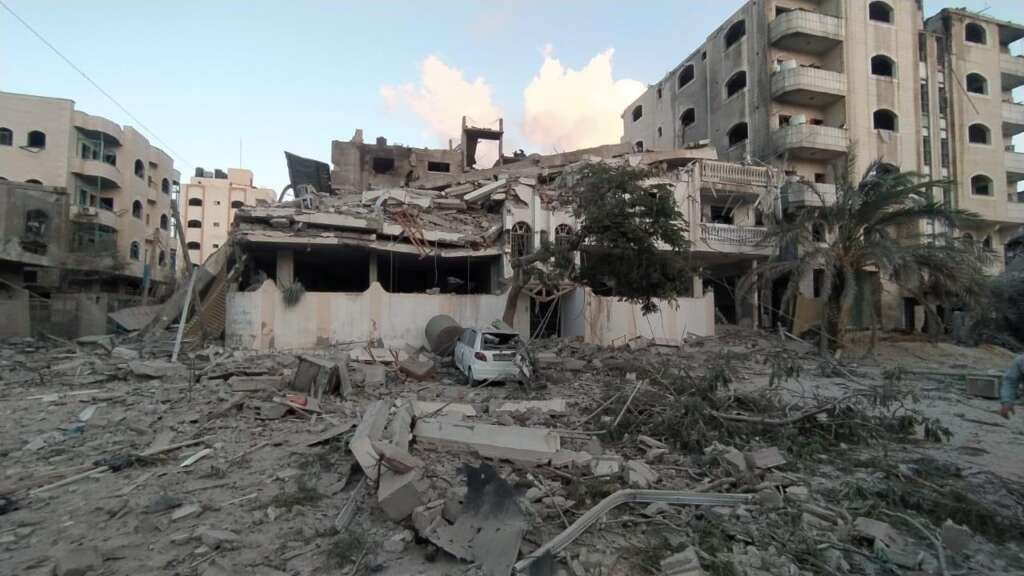
On October 18, 2023, the eleventh day of the war, my home was attacked by an airstrike. Fortunately, we were seeking shelter in the basement, where we had gone every night since the war began. We survived with minor injuries, but we were so close to death. The basement’s entrance was stuck due to the huge amount of wreckage that fell behind it. Getting out felt impossible, but the desire to survive was stronger. We all tried to push it, but to no avail. Then we had no choice but to wait for the rescue crews to save us. The moments between waiting for the rescue crews and the gradual loss of our breath were suffocating and terrifying. To know that you are going to die within minutes is an indescribable feeling—mixed with both faith and fear—faith that you may reach a better place and fear of leaving those you love behind.
Now I can’t stand being in small or closed places. Even being at home feels suffocating. The nightmares never stop—I keep feeling that something is about to fall on my head. I wake up unable to breathe. It feels like that painful night will never leave me.
November 5, 2023
During November 2023, we were displaced to my grandparents’ house in Shuja’iyya. neighborhood. The house was overcrowded with my aunts and their children, who had been displaced. The house was small, with only two bedrooms inside. We, females, used to sleep in a room located at the end of the corner. On November 5, at 8:00 a.m., I opened my eyes to find myself trapped beneath the rubble. I was sleeping next to my younger cousin, Retal, who was severely injured. I was able to speak and move slightly, but Retal was still. Her breaths were barely audible. I thought she was gone. I could not scream. I was dying for a sip of water.
Our neighbors rushed to pull us out.
I saw them as they carried Retal away. Her clothes were soaked in blood, and a large dark stain marked the place where she had been lying. When her mother, my aunt Eman, saw her like that, she began to scream in grief and disbelief.
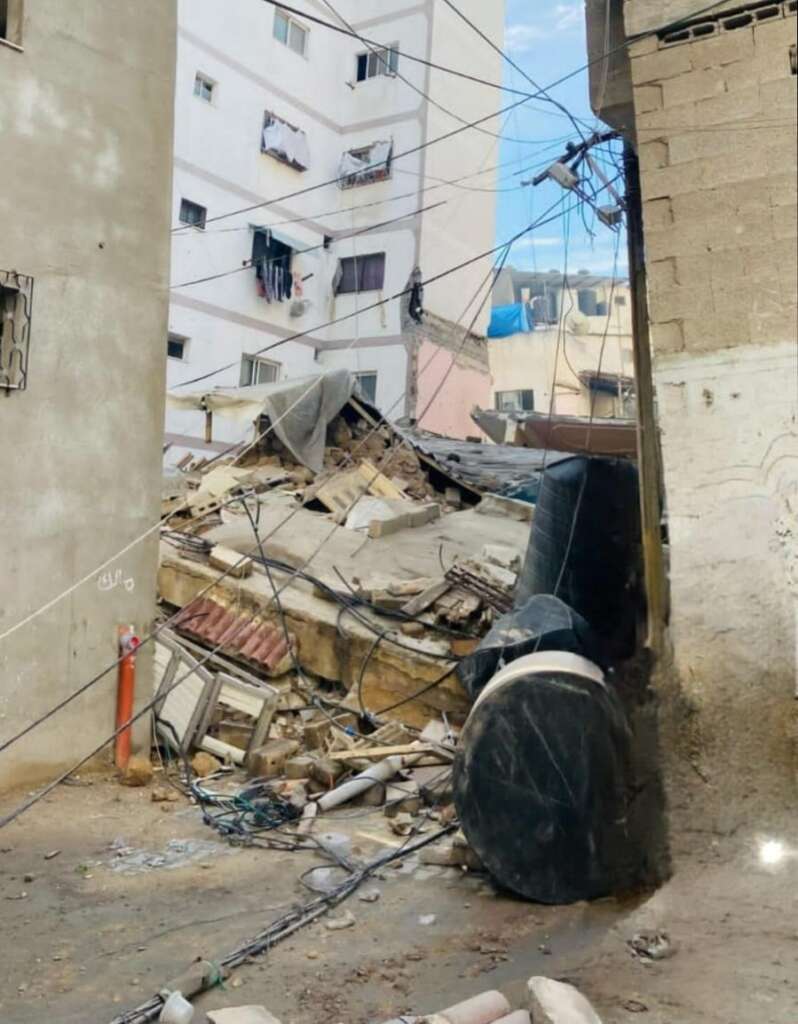
Retal survived, but she still suffers from her injury, which remains serious and difficult to treat.
I used to be someone who never panicked at the sight of blood. But now, I am no longer the same. Even a small drop can make my body tremble—sometimes I vomit, other times I faint. The color red itself has turned into something I can’t bear to look at. To you, it might be only a color, but to me, it is the memory of that heartbreaking morning—the morning I saw my cousin almost dying before my eyes, powerless to save her.
After the incident, we left my grandparents’ house for another house in the Al-Sabra neighborhood, located in the south of Gaza City.
December 21, 2023
On December 21, 2023, the Al Sabra neighborhood, where my family was displaced, was heavily attacked—not only from the sky but also from the ground. Some of our neighbors said they had seen Israeli tanks at the end of the street. At first, we didn’t believe them until everything changed in a second. Quadcopters flew low, shooting at anything that moved. Drones were so loud that we could barely hear the tanks as they got closer. Artillery shells began to fall on people’s houses, forcing everyone to leave quickly, without any chance to prepare their belongings.
Some managed to escape, while others tried but were immediately targeted by snipers. Because we couldn’t open the windows, I moved a corner of the curtain to see what was happening outside. What I saw left me frozen—the bodies of martyrs lying still across the street and wounds screaming for someone to evacuate them. We were too afraid to take the risk and leave, so we stayed inside.
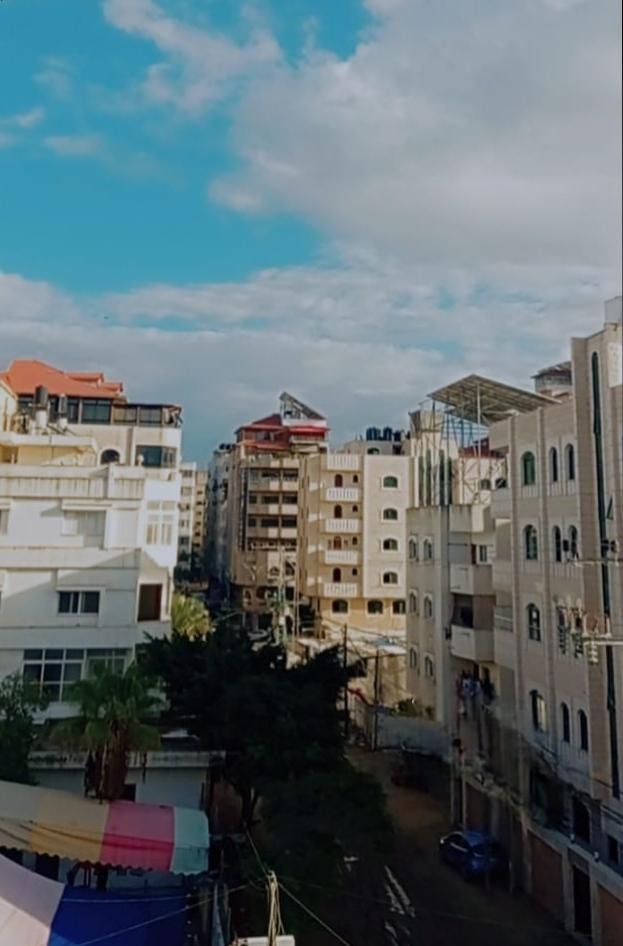
We were besieged for an entire week. Food and clean water nearly ran out. We closed our phones. Our movement was limited. It was then that I truly understood what it means to be imprisoned—to have no right to move, knowing that even a single step could cost your life.
I learned what it means to survive on salty water, your body refusing it, but you force it to survive. I know what it is like to be denied sunlight. These weren’t just past experiences; they are scars that will shape my life, perhaps for eternity.
I will not forget that moment when I dared to open the curtains. I saw a man trying to flee with his children, but the sniper shot them all. I always think: what if that man had been my brother or my father?
Now, as we are displaced in a tent in the Al-Mauasi area, I keep telling my mother, “If we ever find a home, we won’t hang curtains on the windows.” This is because curtains are also a reminder of a scene that I never want to remember.
Some of us may have survived the genocide, but the rest of our lives will be reshaped by what we saw, heard, and ate.
As an adult, I’m trying to recover. But it’s very hard to erase two years of your life. It’s not easy to go on as if nothing happened. Even if you manage to forget, everything around you keeps reminding you of it.
Children, the most affected group, were supposed to play, to learn and grow naturally. Throughout the genocide, they grew up too quickly, not as ordinary children, but as ones whose lives would be reshaped by trauma. My 8-year-old cousin, Retal, was innocently sleeping. In just seconds, her life changed forever. She can no longer play like other children. Retal is one of the War’s child survivors, whose soul survived the genocide, but whose bodies did not.
UNICEF Middle East and North Africa Regional Director Edouard Beigbeder said, “One million children have endured the daily horrors of surviving in the world’s most dangerous place to be a child, leaving them with wounds of fear, loss, and grief.”
For us, war is not over. Israel continues its attacks. We are still living in tents, with aid scarce and prices soaring. Schools and universities remain closed or even destroyed.
As long as these conditions persist, the trauma we carry cannot be fully overcome.
Still, I hold on to a future where safety is not a luxury, but a right, and where children can grow up without fearing the sky above them. I hope for a day when our memories are not shaped by loss and pain, but by simply peaceful moments we have long been deprived of.
****************
Mariam Mushtaha is an English student and a freelance writer from Gaza. Despite the war, she discovered a passion for writing. She hopes to be a professional writer and a voice for Gazan citizens. Mariam contributed articles to different platforms, especially We Are Not Numbers.
Note: This project is supported by the British Council as part of the SARD programme, which focuses on the role of English and other languages in building resilience. SARD – Stories of Adversity, Resilience and Determination – encourages Palestinians, particularly young people, to share their stories and lived experiences through creative and educational media. The content of this production is solely the responsibility of Resilient Voices and does not necessarily reflect the views of the supporting or partnering institutions.


1 Comment
Marion
Your first hand description of the horrific experiences you have survived more powerful than any news report. Deeply moved by your resilience. Keep writing!