



Resilient Voices began with a simple belief: that every Palestinian youth has a story worth telling — stories rooted in our rich heritage, woven through the threads of tatreez, echoing in the rhythm of dabke, and grounded beneath ancient olive trees that have witnessed generations of strength.
But this project did not unfold in ordinary times.
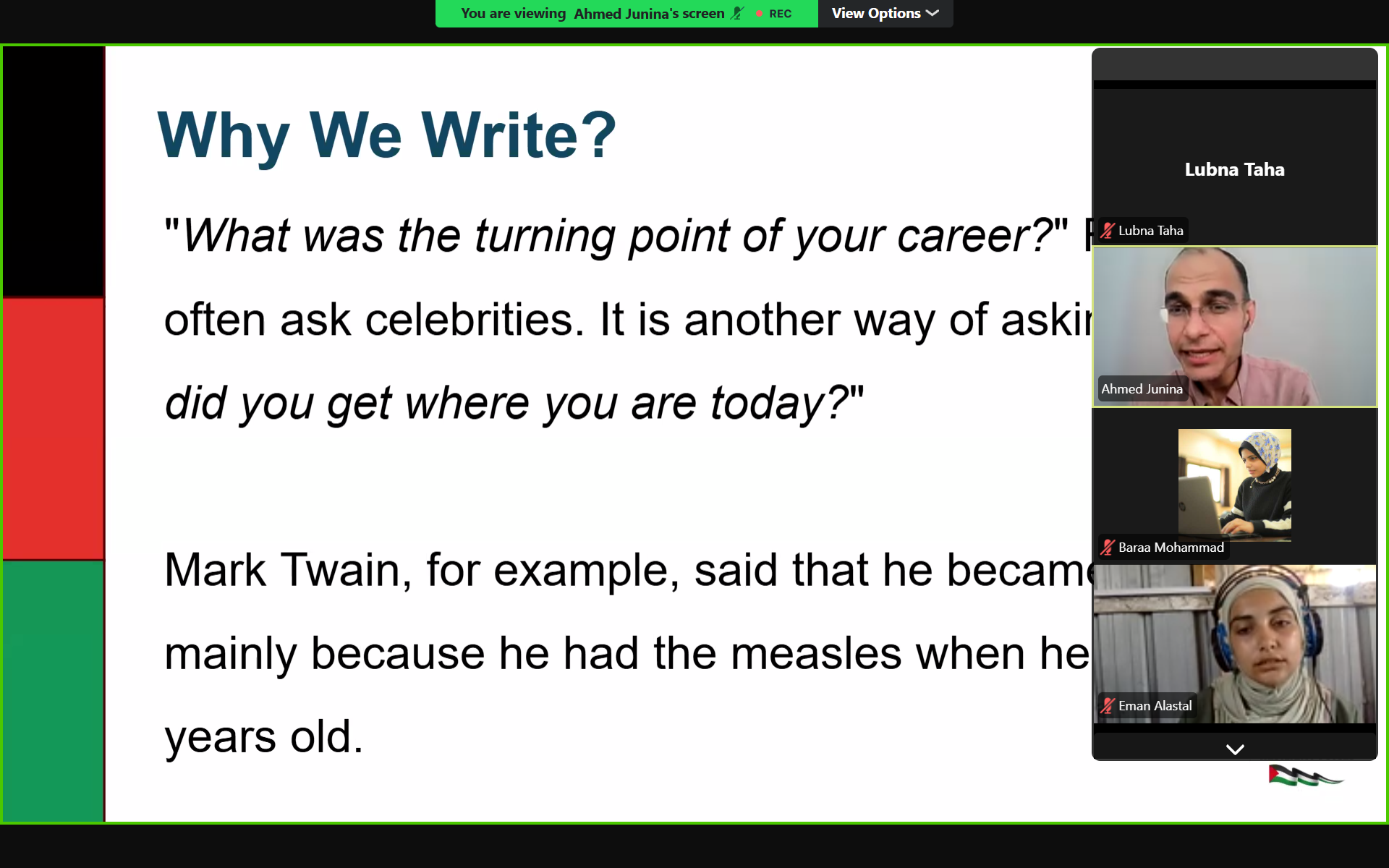
Our workshops and mentoring sessions were conducted during one of the harshest periods Gaza has ever known — a time of siege, displacement, and widespread hunger. Many of our students joined sessions having eaten little or nothing that day. Some logged in from tents, crowded shelters, or damaged homes, conserving phone batteries and sharing weak internet connections with entire families. Still, they came. They showed up with notebooks, with voices, and with an unbreakable need to be heard.
Through this project, proudly supported by the British Council as part of the SARD programme (Stories of Adversity, Resilience and Determination), we’ve watched students transform personal experiences of challenge into powerful written essays, intimate podcasts, and moving videos. They speak of family traditions passed down like precious heirlooms, of overcoming obstacles with quiet determination, and of dreaming boldly for a future built on hope.
These stories are more than words and videos. They’re how our youth refuse to disappear. With every line they write and every sound they record, they’re saying: We exist. We matter.
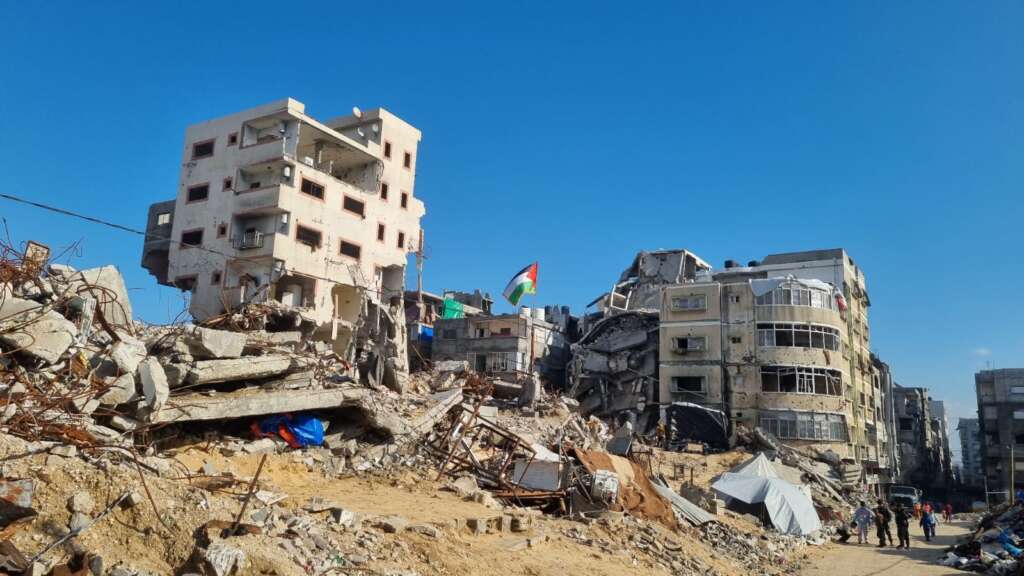
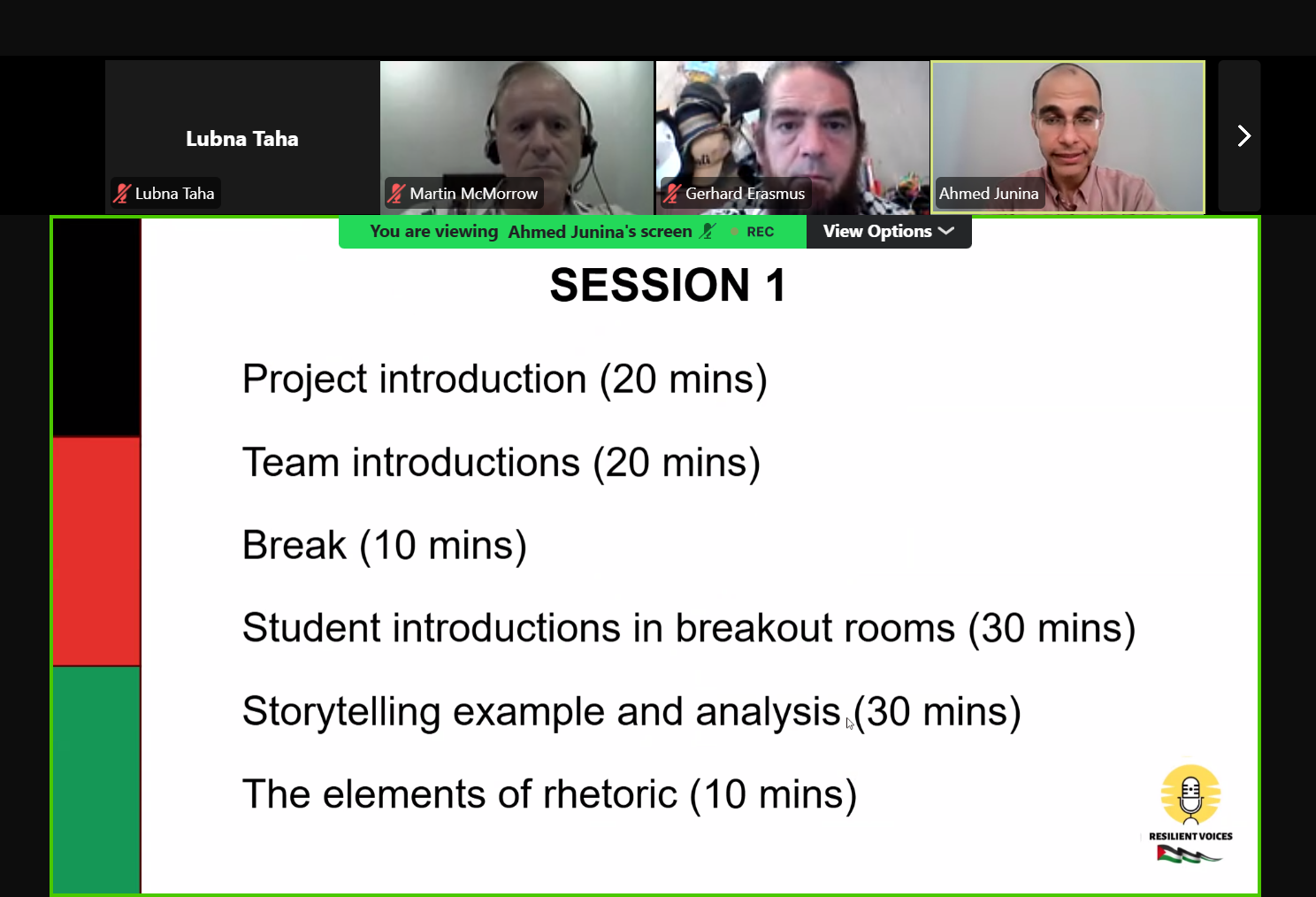
In our sessions, young participants turned hunger, grief, and uncertainty into art that connects us all. They learned not only how to tell stories, but how to survive with dignity, how to speak with clarity, and how to imagine a future beyond devastation.
Recording these stories was never easy. Our participants were scattered across different parts of Gaza, and each location came with its own challenges. Some were filming in shelters, others in damaged homes, others in open spaces surrounded by rubble. For the video stories especially, the environment was never just a background. It was part of the story.
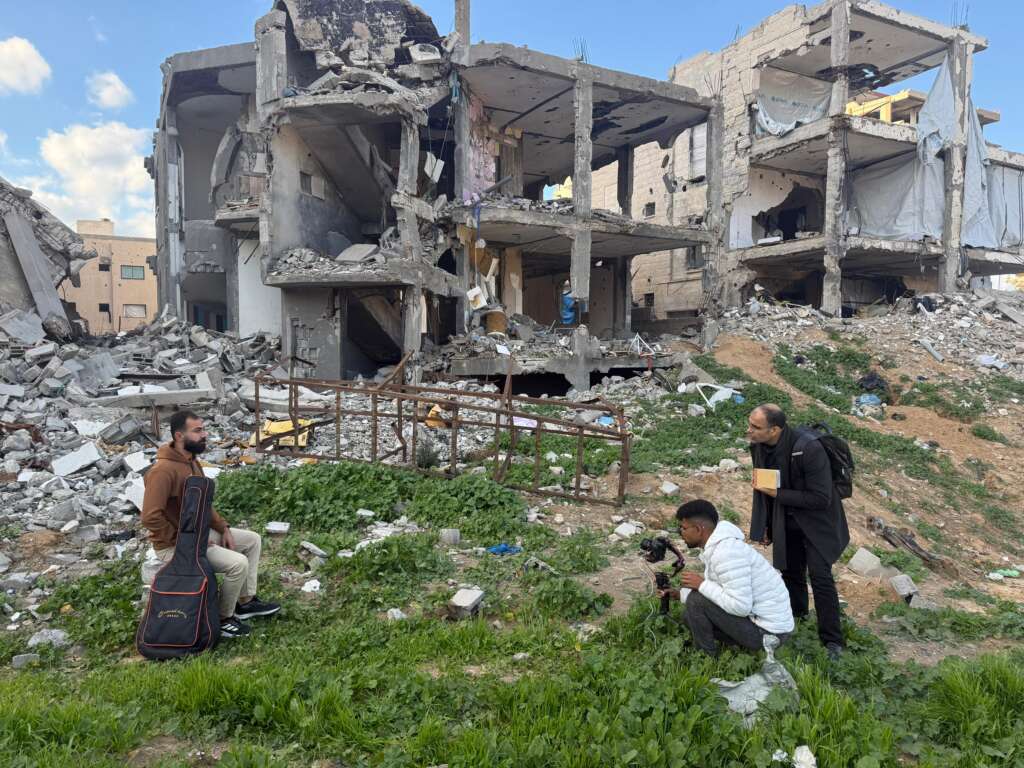
We worked through unstable connections, power cuts, and constant interruptions. More than once, a recording stopped because of noise from nearby destruction, or because someone had to move suddenly to a safer place. Many times, we paused not because of technical issues, but because emotions became too heavy to carry in one breath.
What we witnessed while documenting these stories stays with us. Streets turned to dust. Schools reduced to ruins. Personal belongings buried under collapsed walls. And yet, in the middle of all this, young people stood in front of a camera and spoke with honesty, courage, and clarity.
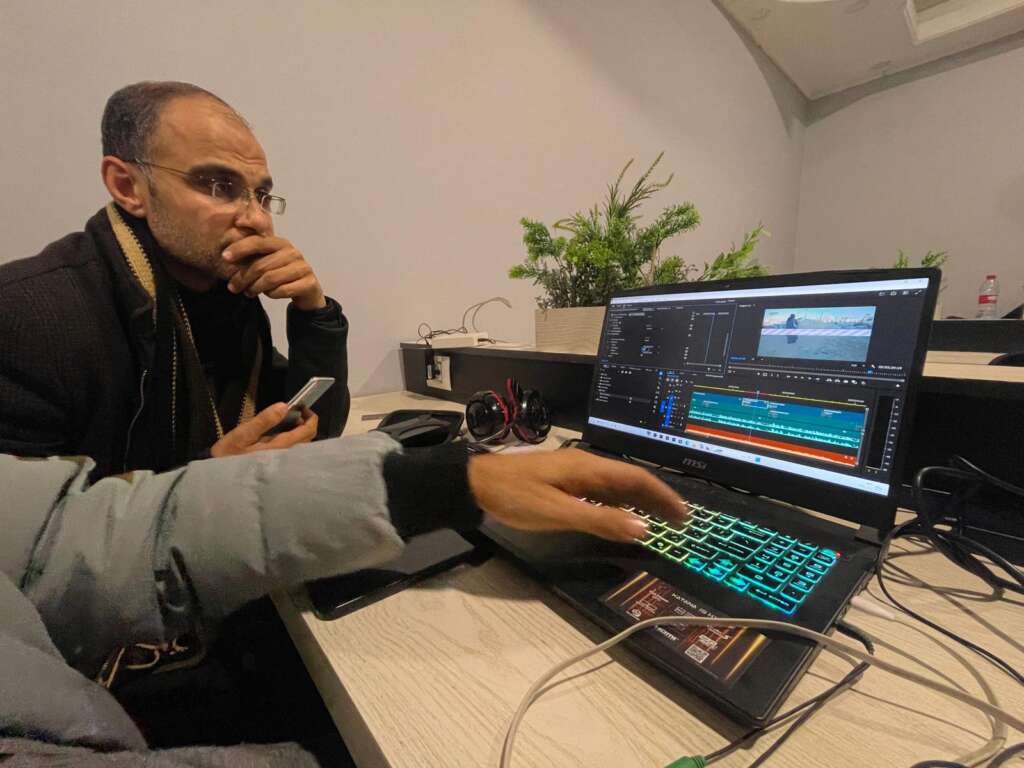
Filming in Gaza during this time meant facing heartbreak every day, and choosing to continue anyway.
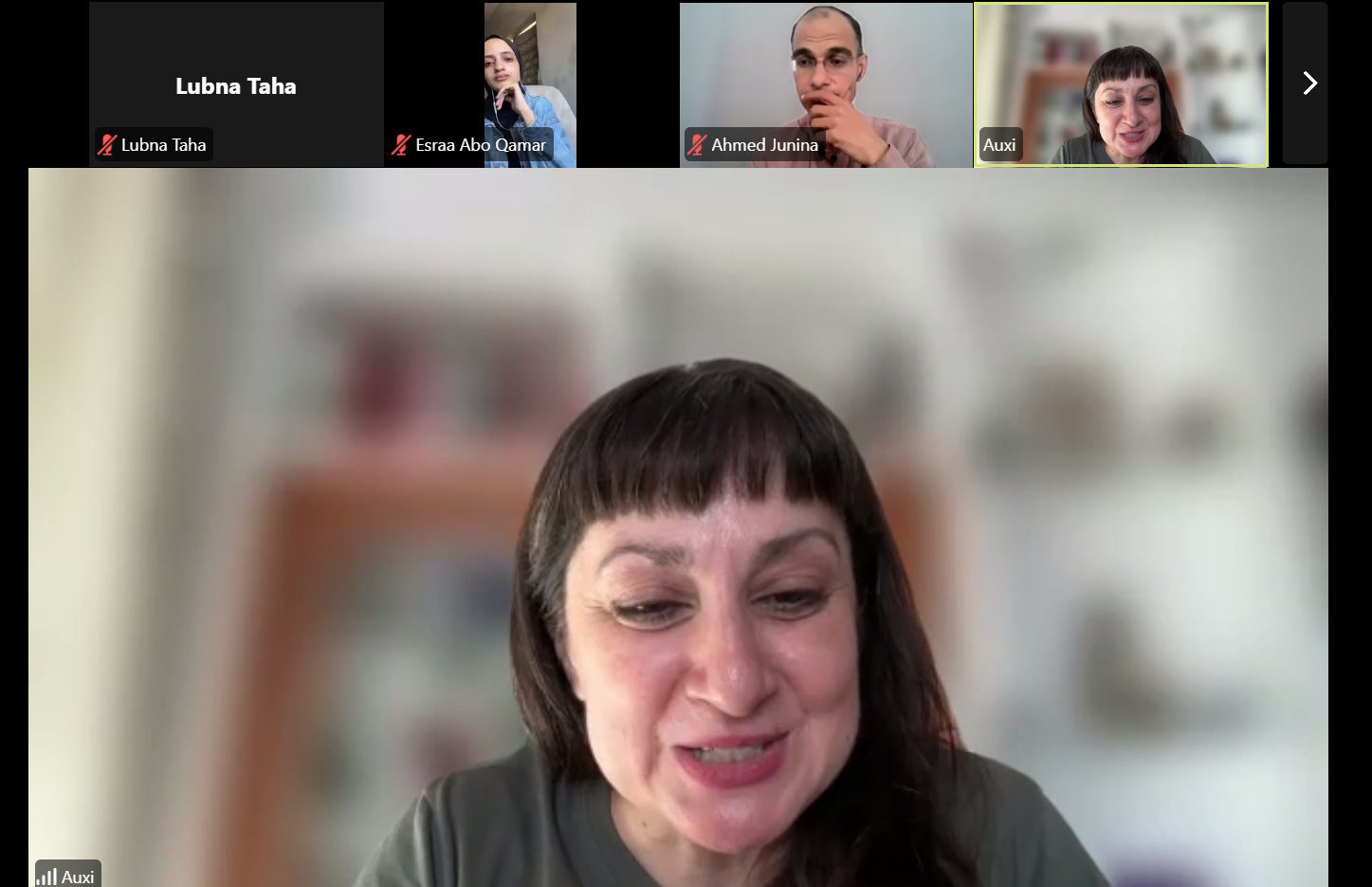
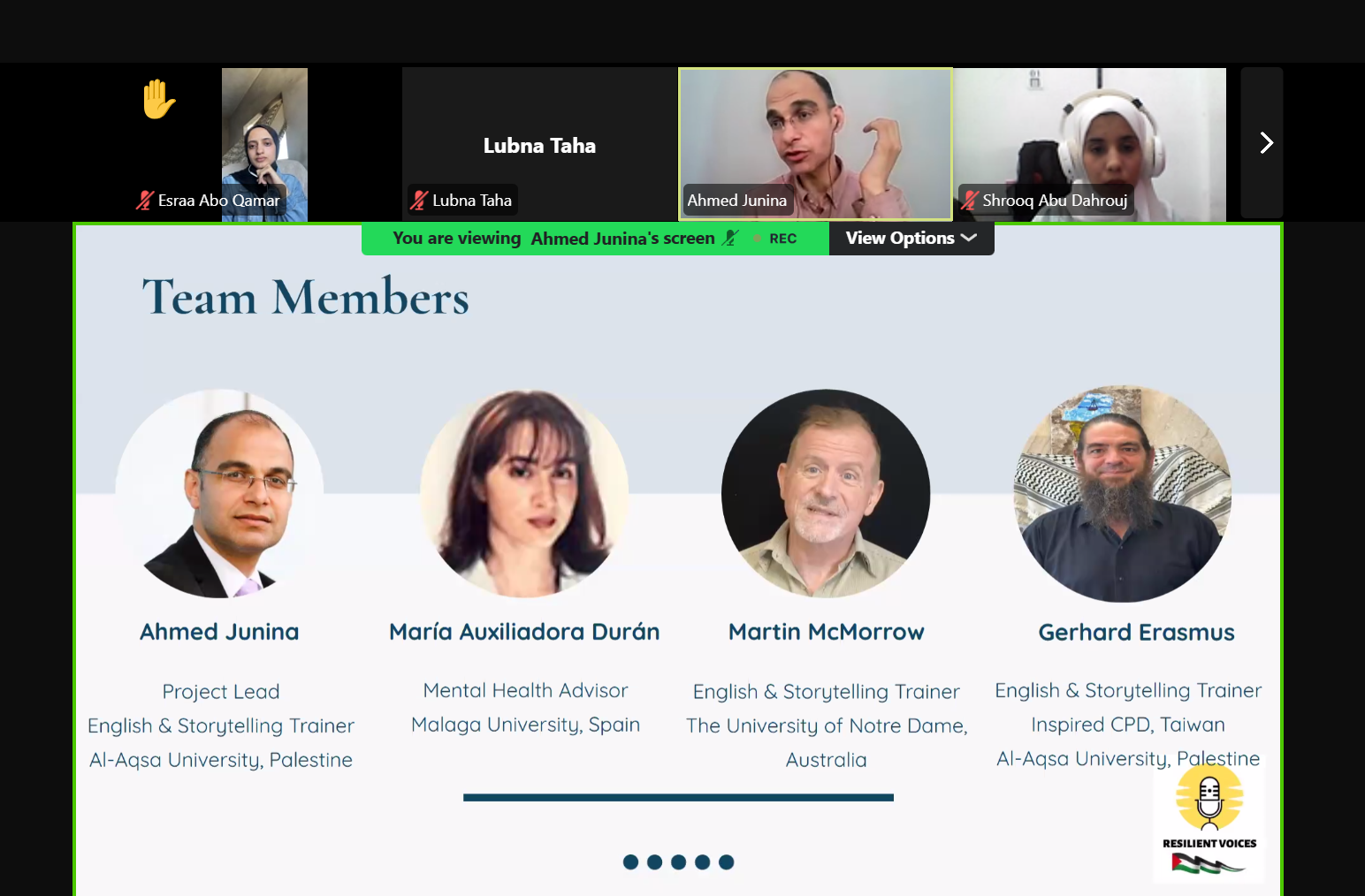
I am deeply grateful to our dedicated team — Martin McMorrow, Gerhard Erasums, and Auxi Duran — whose guidance and passion make this possible. But the true heart of Resilient Voices beats in the courage of our young contributors.
Welcome to their world. Listen, read, and watch closely. These voices are resilient.
In a world that often tries to silence young people, especially Palestinian youth, we choose to amplify them.
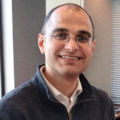
Ahmed Kamal Junina
Note: This project is supported by the British Council as part of the SARD programme, which focuses on the role of English and other languages in building resilience. SARD – Stories of Adversity, Resilience and Determination – encourages Palestinians, particularly young people, to share their stories and lived experiences through creative and educational media. The content of this production is solely the responsibility of Resilient Voices and does not necessarily reflect the views of the supporting or partnering institutions.

1 Comment
Ethel Kosminsky
Dear Dr Junina,
I got your information from Rachel Rosen. I’m a retired professor of Sociology at São Paulo State University, Brazil. I’m Brazilian-American living in NYC. Currently I’ve been working on an article about Palestinian children. When I finished it, I’m going to read your material carefully.