

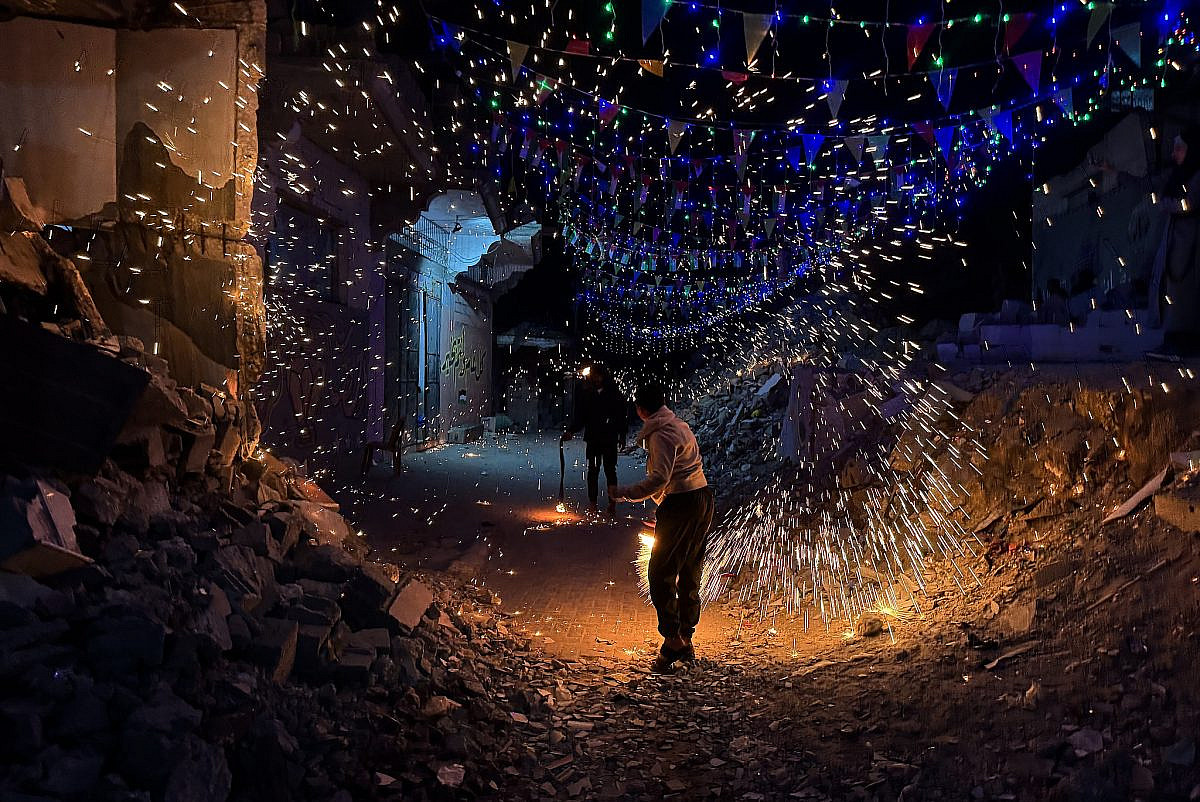

There was a time when the first crescent of Ramadan rose over Gaza like a silver promise—soft, luminous, and full of mercy. The air itself seemed to shift. Streets glowed with strings of colored lanterns; bakeries perfumed the night with the scent of pastries; children ran home clutching sweets, their laughter weaving through the alleys like music. Ramadan was not just a month on the calendar—it was a heartbeat, a collective rhythm that pulsed through every home, every mosque, every soul.
Today, that same crescent moon rises over a different Gaza.
It rises over shattered minarets and neighborhoods turned to ruins. It rises over tents stitched from grief. It rises over tables that no longer gather the whole family. Ramadan is still sacred—but it is no longer the same.
This is the story of how everything changed.
What Ramadan Means Beyond Fasting
For those unfamiliar, Ramadan is the ninth month of the Islamic (Hijri) lunar calendar, a time when Muslims around the world fast from dawn until sunset. Yet fasting is only the visible surface of a deeper ocean.
From an Islamic perspective, Ramadan is a month of purification, gratitude, patience, and spiritual rebirth. It commemorates the revelation of the Qur’an to the Prophet Muhammad (peace be upon him). Muslims abstain from food, drink, and worldly distractions during daylight hours not as punishment, but as discipline—a way to cleanse the soul and awaken empathy for those who live with hunger daily.
As sunset approaches, families gather for that tender moment when the fast is gently broken—when the first sip of water touches parched lips and a date melts sweetness back into the body. Later in the night, before dawn stretches its pale fingers across the sky, families rise again to share a quiet meal (Suhur) that fortifies them for the coming day. Between those two sacred meals lies a journey of worship, reflection, and generosity.
Ramadan has always been about more than hunger. It is about connection—to God, to community, and to oneself.
But what happens when war fractures all three?
Before the War: A City That Sparkled at Night
Before the war, Ramadan in Gaza was preparation in motion. Weeks before the crescent appeared, families would begin cleaning their homes from corner to corner, washing curtains, polishing floors, and rearranging furniture—as if preparing to welcome an honored guest.
Supermarkets and small neighborhood shops overflowed with shoppers buying rice, flour, dates, soups, and drinks. Malls bustled. Children tugged at their parents’ hands, pointing at lanterns shaped like stars and crescents. Ramadan lights were hung across balconies, draped around windows, and strung between buildings like constellations brought down to earth.
And the songs—oh, the songs.
Voices of classic Ramadan melodies echoed from radios and televisions. Songs by artists such as Maher Zain and traditional Arabic Ramadan anthems filled the air, igniting something ancient and warm inside our chests. Even electricity outages could not extinguish that spirit for long; generators would hum, and life would continue.
The nights were alive. Markets stayed open past midnight. Neighbors visited one another. The streets felt safer, kinder, wrapped in a communal softness that only Ramadan could produce.
After the War: When Darkness Is No Longer Symbolic
Now, darkness is no longer poetic. Electricity is scarce or absent. Homes that once sparkled with lanterns lie in rubble. According to reports by organizations such as UNICEF, Gaza’s infrastructure, including residential areas and essential services, has suffered catastrophic damage. The festive lights have been replaced by the cold flicker of emergency lamps—if any light exists at all.
There are no crowded malls. No leisurely shopping trips. Instead, people stand in long lines for basic supplies. Food prices have skyrocketed beyond imagination. Flour, rice, and cooking oil are luxuries. The excitement of choosing ingredients has been replaced with anxiety over whether there will be anything to cook.
Ramadan once arrived with joy. Now it arrives with uncertainty.
The Table That Once Gathered Everyone
Before the war, if you walked through Gaza’s neighborhoods at sunset, you would see entire streets transformed into communal dining halls. Long tables stretched across sidewalks. Families brought dishes from their homes—rice layered with tender meat, stuffed grape leaves, golden pastries, vegetables soup steaming in large pots. Children darted between chairs. Laughter rose like incense.
Breaking the fast was never a solitary act.
But today, many families live in tents or overcrowded schools turned into shelters. Privacy is a memory. Visiting relatives requires crossing dangerous terrain—or is simply impossible. According to the UNRWA, hundreds of thousands of people have been displaced, forced into temporary shelters.
How do you host a family gathering when you do not have a home?
Many sit on thin mattresses spread over dusty ground. A simple meal—perhaps canned food, perhaps a small portion of rice—is shared quietly. The abundance of former Ramadans has been replaced by rationing.
And then there are the empty seats.
Seats where fathers once sat at the head of the table. Seats where mothers once poured water into glasses. Seats that now hold only memory.
Tarawih: When Mosques Were Full
After the evening meal (Iftar), people used to walk together to the mosque for the special nightly prayers known as Tarawih. The recitation of the Qur’an would echo through illuminated halls. Rows upon rows of worshippers stood shoulder to shoulder, united in humility. Tears flowed—not from despair, but from spiritual awe.
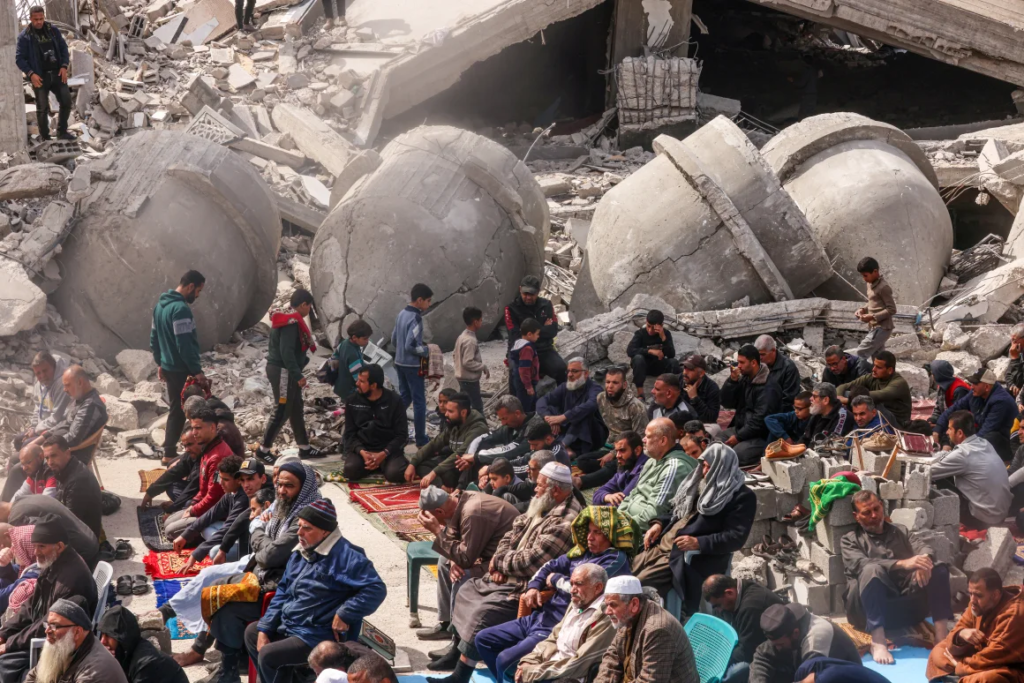
Tarawih had a healing rhythm. Listening to the Qur’an recited over thirty nights felt like slowly watering a thirsty heart.
Now, many mosques lie damaged or destroyed. Reports by UNESCO have documented extensive damage to cultural and religious sites. Where minarets once pierced the sky, there are piles of concrete.
People still pray—but often in tents, in corners of shelters, or alone beneath a sky that feels heavier than before.
The mosques are wounded. So are the hearts.
Grief at the Iftar Table
Ramadan magnifies emotions. Joy feels brighter. Sorrow feels deeper. This year, grief is everywhere.

Some families lost fathers, mothers, siblings. Some lost entire households. Others are separated across borders, evacuated for medical treatment abroad, uncertain when—or if—they will reunite.
I think of my colleague Saja.
She once spoke about Ramadan with sparkling eyes, about her father’s jokes at the dinner table and the way he insisted on serving everyone before serving himself. Now, she wears glasses—not because of age, but because of tears. She witnessed her father’s death before her eyes. The trauma dimmed her vision; doctors said the excessive crying strained her sight.
How does she sit at the meal this year? How does she swallow a date when her father’s chair is empty?
There are children who will wake before dawn expecting to hear their mother’s voice calling them to eat—only to remember that voice now belongs to memory. There are parents who prepare a small meal and glance instinctively toward the door, as if their displaced son might suddenly return. Ramadan used to gather families.
Now it reminds them of who is missing.
And still—astonishingly—Ramadan comes.
Even in tents, people whisper prayers. Even with little food, someone will share half of what they have. Even in darkness, a small lantern may flicker. The essence of Ramadan—patience, charity, faith—has not disappeared. If anything, it has deepened.
Perhaps this is the cruel paradox: when everything external collapses, the internal meaning becomes sharper.
Ramadan in Gaza before the war was a festival of lights, flavors, and community. Ramadan now is quieter, heavier, stripped of decoration. But beneath the rubble, beneath the grief, there remains a stubborn faith that refuses to die.
The crescent moon still climbs into the sky.
It looks down upon tents instead of rooftops, upon ruins instead of balconies. Yet it shines the same light it always has—soft, unwavering, patient.
And perhaps that is the lesson Ramadan whispers to Gaza this year:
Even when everything changes, faith endures.


2 Comments
Saja
مقال رائع من كاتب أكثر من رائع.
AbdAllah
AlhamdulIlah for Ramadan.
“O you who have believed, seek help through patience and prayer. Indeed, Allah is with the patient.” (The Qur’an 2:153)