



In 2018, as a teenager on the doorstep of university, pure adrenaline would pump through me every time I slipped out of our house, sneaking through the door.
My parents tried many times to convince me to spend more time in the house with them, but I would convince myself that I was trying to build a decent career.
Staying at home wasn’t a priority – my home, I thought, was a for-granted thing.
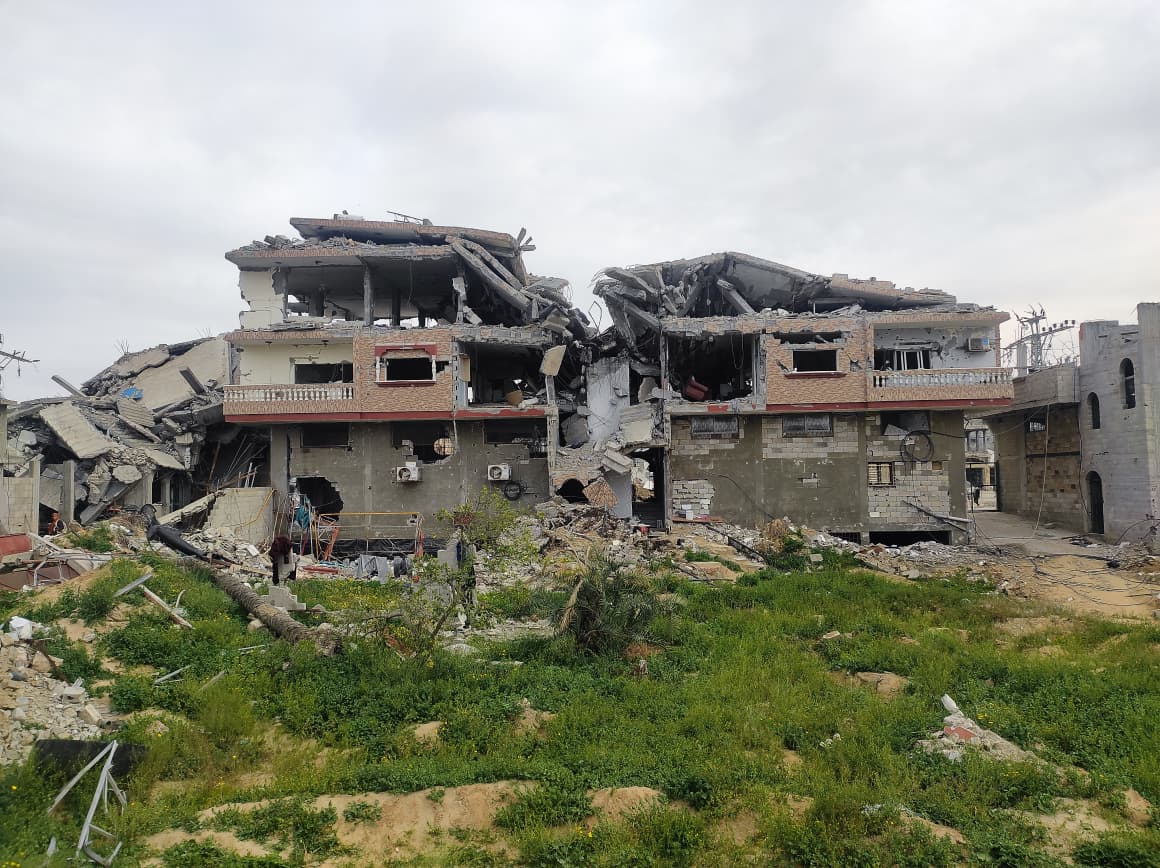
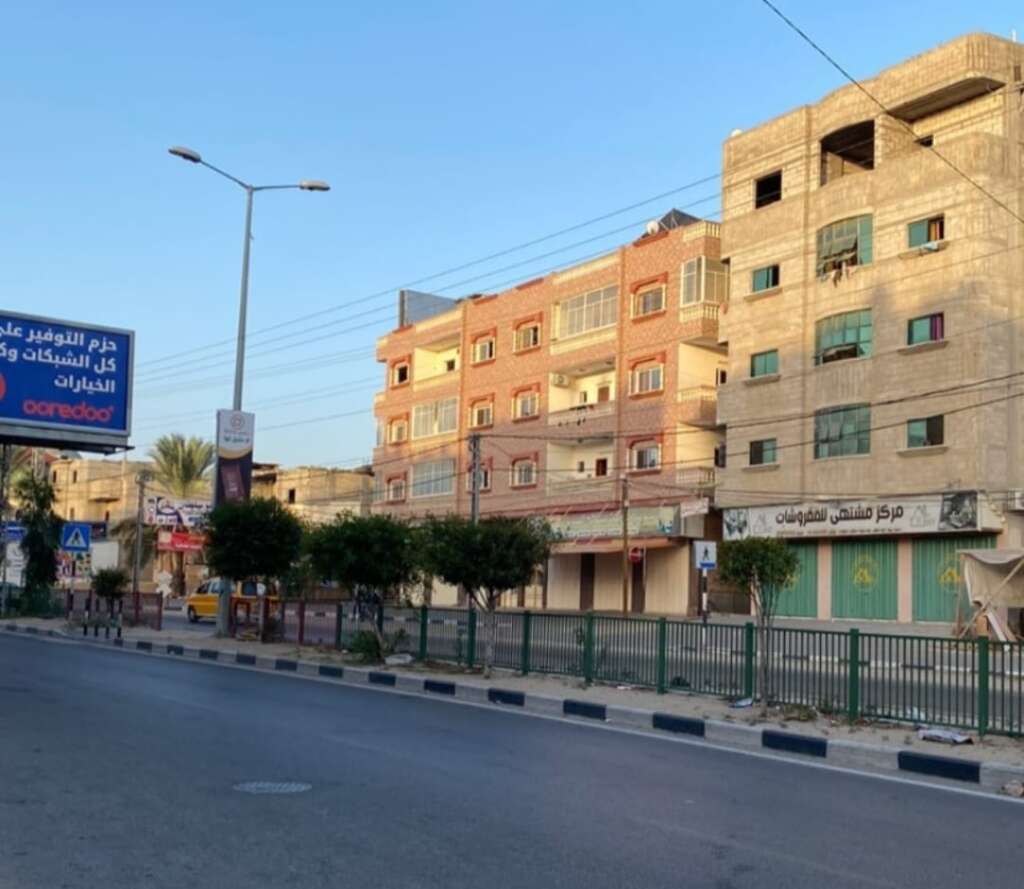
It was a residential building in Khanyounis city, made up of three floors, with two apartments in each. Every apartment belonged to one of my uncles.
We had a roof for family gatherings and barbecue nights.
A palace with a Roof
It was where I grew as a child, when I didn’t understand why my parents loved the house so much.
I remember that once as a child, I used to watch TV cartoons in my earliest years. Aladdin was one of my favorites. He is a traveler who flies on his magical carpet and explores the wonders of the world until he meets Princess Yasmin and falls in love with her.
I remember telling my parents: “Mama, Baba, I want a palace like Princess Yasmin.”
Baba smiled, “Our home is better than any palace in the world.”
I could not understand him at the time—how could our humble home be more beautiful than Yasmin’s?
I thought he was wrong. There was a very big world that I watched through TV, full of colors and wonders, and he still believed that our home was better than all these beautiful places.
Baba felt strange to me. I mean, come on, it was not even a villa. It was just an apartment in a shared family building.
Yet, he had always refused to leave it. Baba hated traveling, too. He even refused to move us to Gaza City, where his job was. For twenty-three years, he drove two hours every day, back and forth, just to keep living in our home in Khan Younis.
He was that kind of man who loved routine, family, and quiet.
Whenever work asked him to travel, he complained and never showed a sign of excitement. At that time, I wished I could hide inside his traveling bag so at least one of us would be happy.
I used to question his deep, seemingly unjustified love.. I was young, feeling his deep sense of belonging to those walls, without yet understanding why.
When I became a high school student, Mama and Baba were counting on me to get A+ and excel at Tawjihi, which is the high school certificate in Palestine.
They tried their best to give me the perfect environment to study. Still, it was almost impossible to control my six siblings’ noise at home.
I used to complain until I took the rooftop as my own corner.
Our rooftop was heavenly. From the eastern side, it looked directly onto Salah El-Din Street, the main road in Gaza, stretching from north to south.
People from above looked so small, running nonstop in the wheel of life.
Cars passing like Panadol pills. Right and left. North and south.
Horns. Noise. Colors.
Whenever I felt overwhelmed by noise, I turned to relax on the western side which looked directly onto the family land.
It was wide and open. Too calm and quiet.
Olive trees, pomelo, orange, almond, fig, grape, lemon, guava, palm trees.
Growing Away from Home
When I entered university, my life changed.
I became a busy studious student, consumed and involved in building my future with no time to waste on fun.
I believed I had a message in life, and I tenaciously devoted myself to it.
I joined courses, community activities, established fairs, led initiatives, and even took extra hours to graduate faster.
Was I competing with time? I do not know but I managed to get my first job in my second year at university.
That period I was stubborn about my identity, freedom, and independence. I was growing quickly at the cost of spending time at house and attending parties and family gatherings.
Baba still had that strict rule: no coming home late. Because of that, we often fought together, especially when staying out after sunset.
When I finally would return to the house exhausted, I would fall asleep immediately.
In my last two years before graduation, I worked evening shifts as a content trainer at Rafah City. I would come home after nine p.m., then stare at my laptop screen, preparing for the next day.
Thoughts from a Tent
Now, as I sit in my tent, with the career I managed to build, I wish I had spent more time there.
I wish I had never been that busy, even if success had come more slowly.
After the first ceasefire in November 2023, Israel immediately issued evacuation orders to Khanyounis. People still had hope that the ceasefire will not break and we will not lose Khanyounis or Rafah.
On 1st December, Baba gathered us over lunch and told us that the Israeli army would start their ground invasion against Khanyounis.
He asked us if we wanted to leave or stay. “What do you want to do?”
“You,” I stared at him, “not we?”
He answered in a strong voice, as if he was defending his decision. “I will stay. You are free to choose. But I will stay in my home and will never flee to any other place.”
Deep breath, then, “But you have to know that if you choose to stay, and when the zero hour comes, the army might kill you or torture you to death.”
Silence filled the air. No one dared to continue the meal. That night, Baba gave us time to decide whether we would flee to Rafah, which the army had declared a “safe area,” or stay with him.
We decided to stay. We would never leave Baba, when he had never left us his whole life.
I was twenty-two years old, and I had never seen Baba sleep outside our home.
That night was the heaviest. Too dark. Endless bombs.
The drone buzzed in my ears so loud it felt like my eardrums would perforate at any moment. How do people spend their last night in their homes? How do they say goodbye to walls?
I was trembling. I remember preparing a coffee in my favorite mug. I opened a novel on my laptop and started reading, trying to escape the thunder of the bombing.
The earth was shaking; my heart felt wrenched out of place.
Two hours later, I turned off the LED light and put my head on my pillow. I hugged the pillow tightly with a strong desire to hug the bed itself, or no, the entire home.
Even though we had already decided to stay, the possibility of losing it slaughtered me insanely.
I cried. On that night, I cried.
It was the last hug.
In the morning, the sky rained evacuation orders.
No one stayed in the neighborhood except Baba and two uncles and some other men.
With the stormy bombing, Baba decided that we must leave him. He took his decision despite ours.
People said it will be temporary and we will come back to the city again. He was still having some hope and believed things would change soon.
Maybe the world will act?
Red Pepper Sauce
After he arrived at Rafah, he learned that the soldiers had arrived at our home. Without hesitation, he left us immediately to ensure the home was still standing. He risked his life and we spent hours of horror until he got back to Rafah.
That night, I began imagining the worst possible things that would happen to our home.
I wondered if they would ransack it. The first thing that flashed through my mind was the red pepper. It was the last thing we prepared in our kitchen.
During the ceasefire, mama had prepared red pepper sauce in a large container that needed to be stirred daily so the salt could settle.
When we left, we asked Baba to stir it so we get it ready when we are back.
Yet Baba managed to stir it only three days later. Then he had a direct order to flee or the army would shoot him.
I had been complaining while Mama was making it, hoping it would last us a whole year. I imagined them wasting Mama’s effort, pouring it onto the walls, writing Hebrew words with it, staining the floors and the walls.
For a moment, I found myself quietly complaining, imagining how exhausting it would be to clean everything when I would return.
I wished that if the soldiers entered our home, they would maraud it quickly, not stay long, not destroy much, and leave the walls as they were. Just that.
I admit now that I was too naive. I mean, if Israel is the occupier, how could I have imagined, in good faith, that the worst thing they could do was smear our walls with red pepper?
None of my worst imaginings came true—because the soldiers chose the image I was averse to. They bombed it all.
When did I first realize that I would never see my home again? I do not know.
We spent a whole month caught between wish and reality. Sometimes we were told it was ok. Other times people said it was partly bombed.
And every time we checked the satellites we began spinning theories and analyses, always uncertain, but hopeful.
Have you ever tasted the feeling of checking your home from satellites?
Too Late Love
I often wonder what the soldier who bombed our home was doing at that exact moment.
Was he playing cards with a friend, joking that if he won, he would bomb the most beautiful house in the area? Was he promising his girlfriend to destroy an entire neighborhood for her? Or did he think of blowing up our home as a birthday gift for his son, whom he cannot even see because he is busy killing children in Gaza? Was he on a video call with his fiancée? Or filming a story on Instagram?
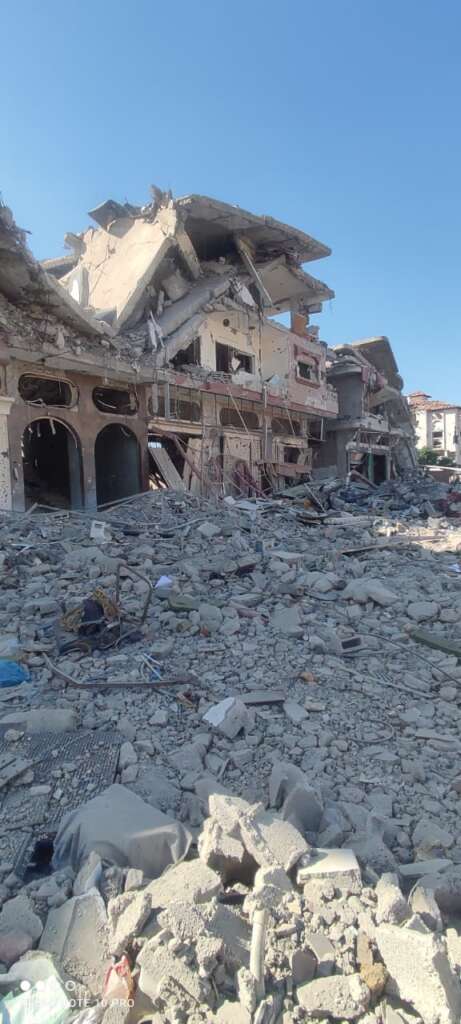
Now, as I recall all these thoughts, writing this blog and looking around my tent in al-Mawasi, regret and nostalgia consume me. I wish the clock could turn back so I could feel it all again. I miss it and its walls. I miss my bed, my room, my office. I miss the Eman I used to be. I miss those days. I want my home back. I just want to feel safe again. I want Mama and Baba as they were.. They’ve changed. I’ve changed. We all have.
When Israel killed our home and destroyed our land, it killed us too.
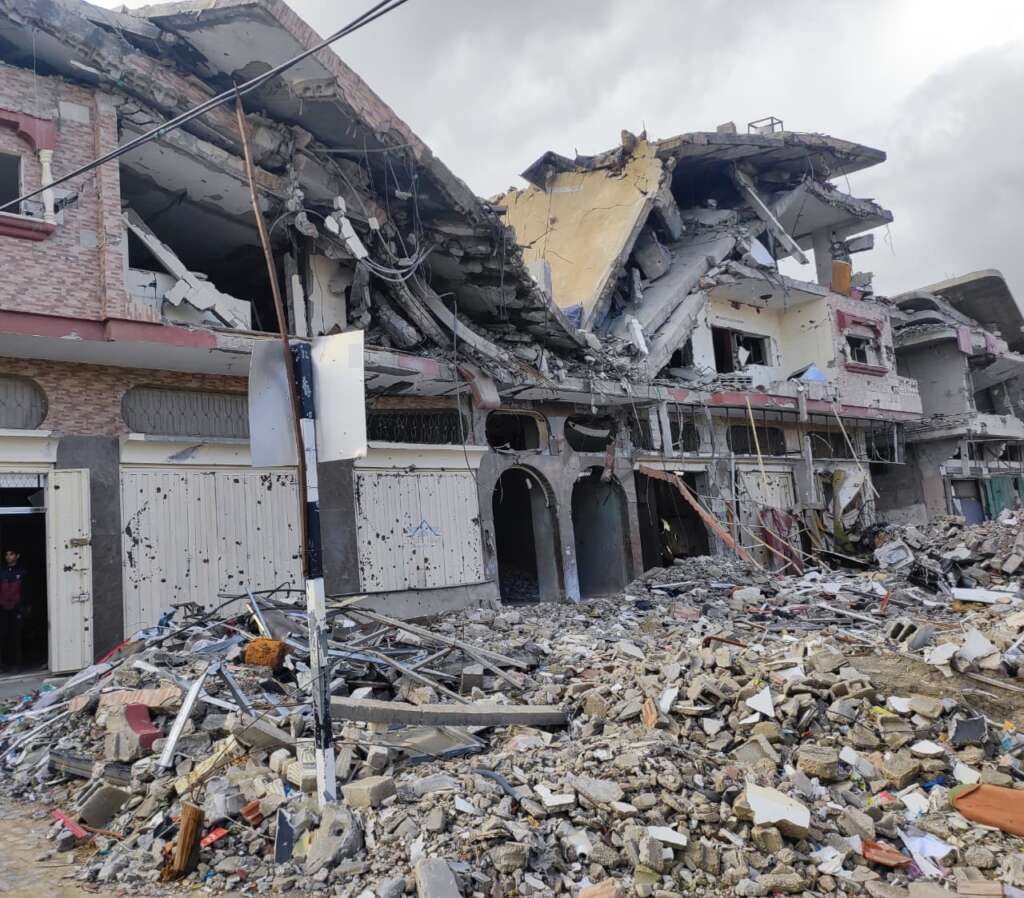
It was the best of places. It was the worst of places, it was the spring of love, it was the winter of sadness, it was the wall of relief, it was the wall of despair. It was the place I loved most and the least I spent time in.
It was my reality, it is now my dream.
Note: This project is supported by the British Council as part of the SARD programme, which focuses on the role of English and other languages in building resilience. SARD – Stories of Adversity, Resilience and Determination – encourages Palestinians, particularly young people, to share their stories and lived experiences through creative and educational media. The content of this production is solely the responsibility of Resilient Voices and does not necessarily reflect the views of the supporting or partnering institutions.


2 Comments
Farah
Emotional 😭 go ahead Eman 👍❤️🩹
AbdAllah
Be patient. In our grief there is mercy, a light, forgiveness from Allah, and everlasting good in the next life. “And We will surely test you with something of fear and hunger and a loss of wealth and lives and fruits, but give good tidings to the patient…” (The Qur’an 2:155)