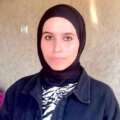
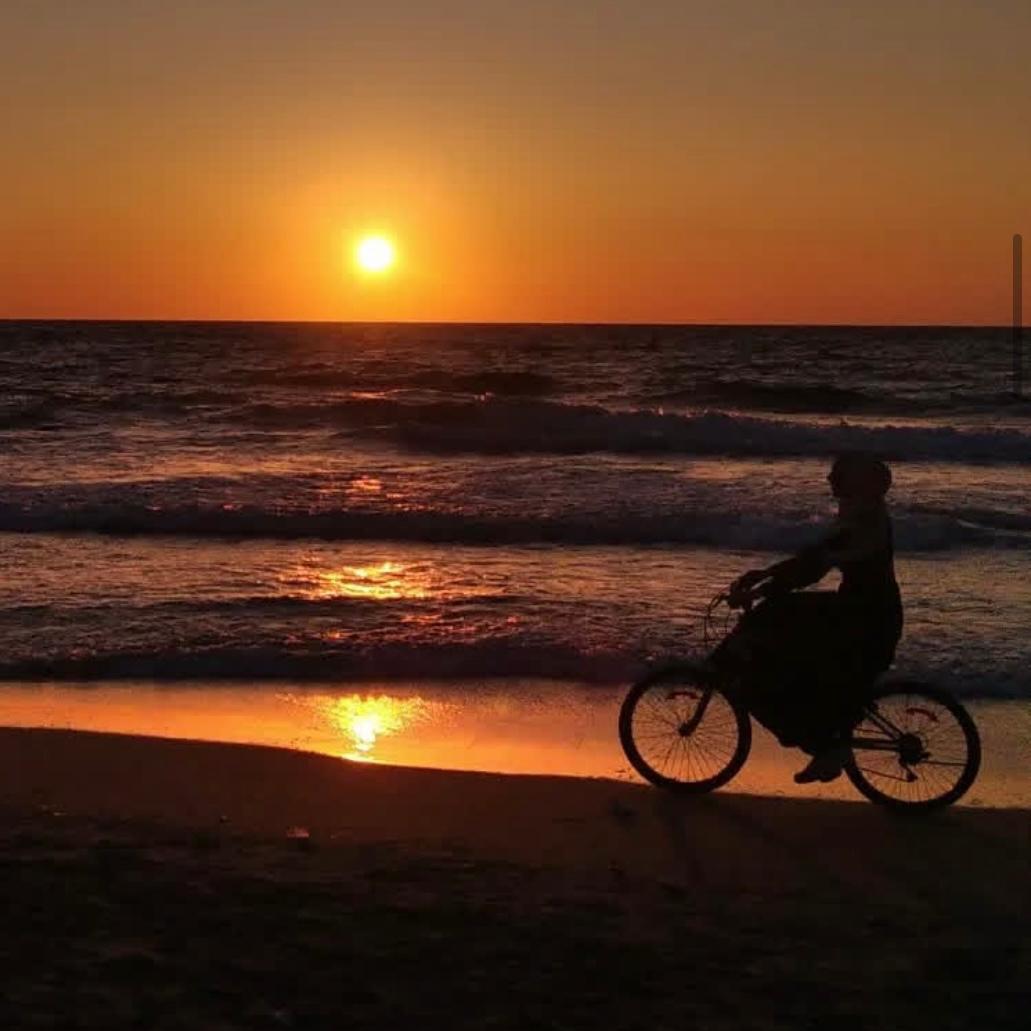

“I just cannot imagine that you could be so okay now that I’m gone.” “Looking at me, tell me, what do you see? Have I crossed the line? ”
These were the very last words Maysar wrote. She sat on the sofa in front of her mother and father, laughing, humming, and scribbling down the last remnants of what was left in her throat. Her mother asked, “What are you doing? Have you lost your mind?” She answered, “Yes. Now, hold me.” The night ended with Maysar in her mother’s arms, the final embrace. I wonder, what did Maysar feel that night? What sudden impulse drove her to cling to her mother like that?
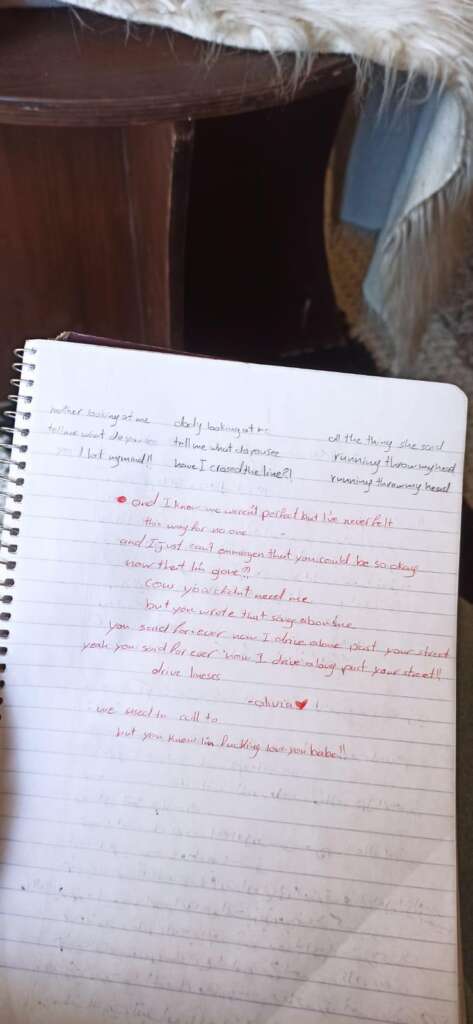
Maysar slept and then woke to a morning where her mother was preparing breakfast. By then, famine was already gnawing at us. Maysar ate a meagre piece of bread with za’atar and told her mother she had a lesson. She was preparing to finally finish her high school, which is called Tajehee in Palestine, a milestone delayed nearly two years by the war. She stepped out into the morning light, walking with her friend beside a tree, when suddenly, a missile fell upon them. Maysar has gone into eternity, with no return, exactly as she had written in her diary.
Maysar was a girl in love with life. She had almond-shaped eyes and blond skin; she was breathtakingly beautiful, like a houri, a nymph from paradise. She possessed a beautiful voice and was always singing, “The pretty girl with almond eyes, I love you from my heart, oh my heart, you are my eyes.” She dreamed of becoming an English teacher one day; she used to frequent language centres, spending her entire day refining her English. She was a happy soul who knew no meaning of sadness. Even on her gloomiest days, she would message me, and we would escape to my favourite spot on the Al-Sudaniya beach in Gaza.
I remember a day in February 2023. Maysar and I went to the shore in the winter; the sky was full of clouds; no one was there but us. We sat before the crashing waves, screaming at the top of our lungs, singing raucously, running along the shore in front of the surf, drinking coffee, and returning home charged with high energy. Maysar spoke to me as if I were her therapist. Until the war erupted, we were inseparable.
At the beginning of the war, Maysar lived in the Al-Karama area in northern Gaza. She was displaced to our house in the west. We spent the first days of the war in my home, living through the horrors. Yet, our time together softened the heavy tread of death around us. We made tea together; we baked cakes in the evening so the children would forget the bombing. We sat for hours, reminiscing about our memories before the war, talking about the olive trees at her house and what might have happened to them amidst the intense shelling. We talked about the Flora tree on her roof and how I used to come sit beneath it, contemplating the serenity of life without the soundtrack of explosions.
At that time, Maysar was deeply attached to the furniture of her room. With every sound of a heavy strike, she would ask me, “Is that targeting my house? What will happen to my library? To the wardrobe with my favorite dresses?” I would tell her not to worry, that saving her soul was enough for now.
The days rolled on in this rhythm until the bombardment intensified. One day, we were all sitting in my grandmother’s house when a reconnaissance missile struck our neighbour’s home. The glass around us shattered. We all ran to the entrance, wondering what had happened. We had miraculously cheated death but were ordered to evacuate the entire neighbourhood immediately, as the ground invasion of Gaza had begun.
Thus began my journey of displacement. Maysar and I were together through it all. At first, we cried constantly. What had happened? How were we forced to live like this, in a classroom row? Life was harsh then. I was accustomed to a refined, conservative environment, and suddenly I was thrust into a setting that didn’t resemble me. The hardest part of displacement wasn’t the act itself, but accepting life within environments so different from your own mindset. Maysar and I spent our days in the schoolyard, talking about our future, that unknown future that we imagined. Imagination became our lifestyle. Maysar dreamed of getting married, of having children; she was in love with the idea of love itself. She shared her thoughts on relationships, and we both loved the song “Perfect” so much that I told her I would play it at my wedding. She told me, “I can’t wait, Noor. When will our life return? When will we be rid of this hell of war?”
I remember one night during the war, I had a dream. Maysar and I were together on a street in Gaza, and then I saw blood on myself. Maysar was weeping over my death. In the morning, after we prepared breakfast, I told her. She said, “What a strange dream. God forbid, I don’t want to die, Noor, and I don’t even want to go out with you so this dream doesn’t come true.”
Days passed, and our journey of displacement continued from one school to another. We survived death multiple times. I remember clearly a day in January 2024, when the occupation forces advanced on the Rimal area. We were sheltering in Mustafa Hafez School. My mother saw the tanks. We had to choose: stay and die, or run with absolutely nothing but our souls. And run we did, beneath sheets of rain. Maysar and I shared the same suffering. We slept that night without mattresses; even now, I can feel the cold in my bones. In the morning, we sat under the sunlight to warm up, sleeping in some school whose name I don’t even recall. Famine was ravaging our bodies then; not even an orange could be found to nourish our frail frames. We sat remembering the food we used to eat before the war, drafting a list of meals we would cook together when the famine ended. The days continued like this, sharing books, music, and postponed dreams.
Until the morning of January 2, 2025. The news came to me: Maysar had been martyred.
I tried to deny the news at the time. I wrote then: “When someone told me that your end had claimed you, I sprinted to sit on the side of the road, searching for your almond eyes among the eyes of passersby, to tell you that we are holding your funeral now, to pat your shoulder and cry, scolding you, Why would you leave without me? I waited so long, Mays. But you didn’t come. I didn’t attend your funeral, and I didn’t sit at your wake. You know I detest sudden goodbyes. I stayed behind, weeping without you, but your ghost embraced me. Here I am, wrestling with the pain of your death while death surrounds me.”
Then, I mourned Maysar. The features of my face have faded; I am no longer your beautiful girl, Mays. They extinguished the glow in my soul the moment you left me. Who is there now to tell me that the trace of the sun on my eyes is what makes me sparkle? Your ghost still visits me. I see you in every corner of the house. I hear the rasp of your voice echoing in my ears all day long, and I see the laughter in your eyes, despite my attempts to immerse myself in anything else, far from the heartbreak of losing you.
How can I ever forget when your soul is intertwined with mine?
*************
Nour Aboaisha is an independent journalist, researcher, and storyteller based in the Gaza Strip. She is committed to amplifying marginalised Palestinian narratives. Through a unique, first-hand perspective on the genocide, her work focuses on transforming the trauma of survival into critical social and historical documentation. Also, her work has been published with The Guardian, Middle East Eye, The independent, Al Jazeera Net, Mondoweiss, Prism Report, and The National Scotland, and she is a contributor to BBC News and We Are Not Number.
Note: This project is supported by the British Council as part of the SARD programme, which focuses on the role of English and other languages in building resilience. SARD – Stories of Adversity, Resilience and Determination – encourages Palestinians, particularly young people, to share their stories and lived experiences through creative and educational media. The content of this production is solely the responsibility of Resilient Voices and does not necessarily reflect the views of the supporting or partnering institutions.