



Have you ever felt your world turn upside down overnight?
I live in Al-Nuseirat refugee camp in the central Gaza strip, where houses are tightly packed and everyone knows each other like family. People call Al-Nuseirat “the capital” for its bustling, brightly lit streets, always alive with people, its many shops and restaurants. I have always felt deeply attached to this place: a true sense of belonging.
Before this devastating genocide, when the university still stood, coming home after classes was the ultimate feeling of comfort and safety. When the driver reached my street, I could finally breathe. Peace would fill my little heart. I would walk through the alleys, enter my warm home around four or five in the evening, and my mother would greet me with her familiar tenderness, erasing the day’s fatigue. I’d go to my room, change into comfortable clothes, and eat while sitting among books in what my mother calls “Shrooq’s little cave”. I am always an ambitious girl dreaming and working for the best things in life.
Often, I skipped meals for lack of time, and my father would give me a daily lesson: Take a moment to
rest. Eat your mother’s food; it will help you to focus. I always felt like my parents’ pampered little child. Despite the hardships and obstacles I faced, my life was calm, and I loved it dearly.
Since the beginning of the genocide, no one has dared go outside after sunset. It’s too dangerous. There’s no electricity, no internet. Early sleep became our only refuge from a grim reality. Day after day, I heard people repeated: “As long as you can hear the drone’s buzzing, don’t worry; it won’t hit you or come near. The real danger is silence, the absence of the buzzing. If you don’t hear it, the rocket might fall on you at any moment.” I used to wonder: silence, a source of fear? But over time, this proved true. Quiet itself became terrifying.
Sunday, December17, 2023, 7:30 pm
Night fell again, carrying fear, anxiety, and nightmares. The drone’s buzzing pierced the stillness like a ghostly scream cutting through the dark: “Do not forget, I am here… I will not let you enjoy peace.”
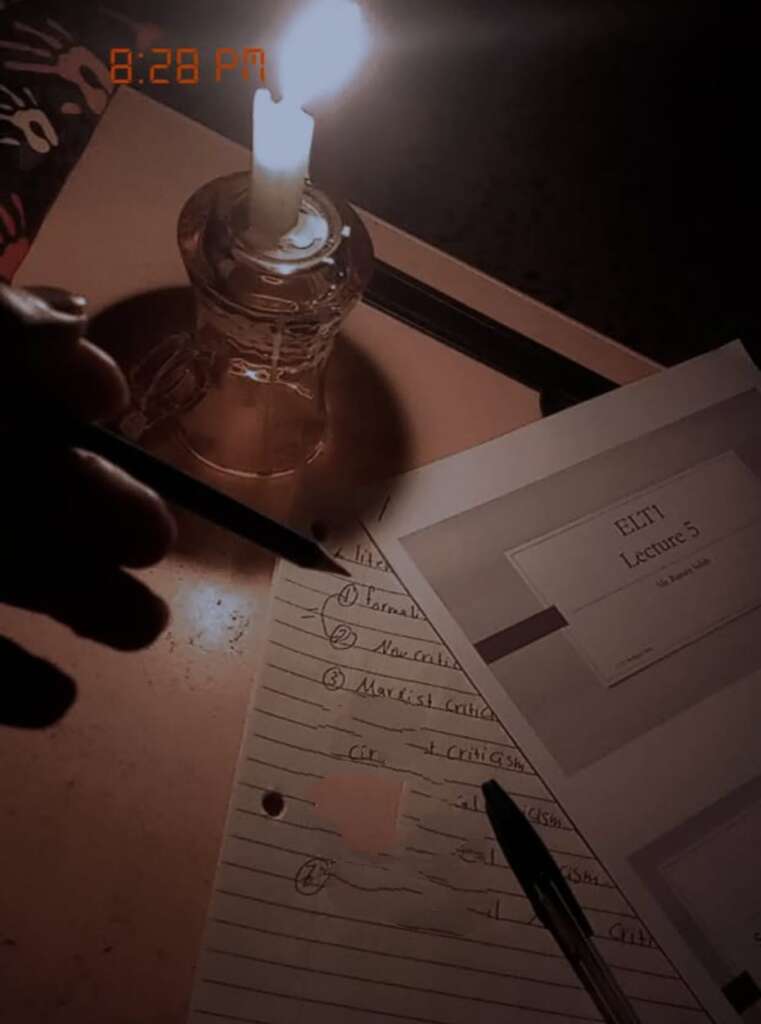
That night, I finished praying, as every day, I planned for my next day self-study schedule, prepared my books, pencils and bright highlighters and decided not to give in under any circumstances, then began preparing for sleep. I arranged my blankets and lay down, seeking warmth and comfort, trying to quiet the thoughts racing in my head. I thought of the displaced and those who had lost family members. I thought of my future. Just two months ago, I was a senior at university, full of passion and excitement, eagerly awaiting graduation. How did I end up here —lost, in shock? I Keep wondering, Would I survive?
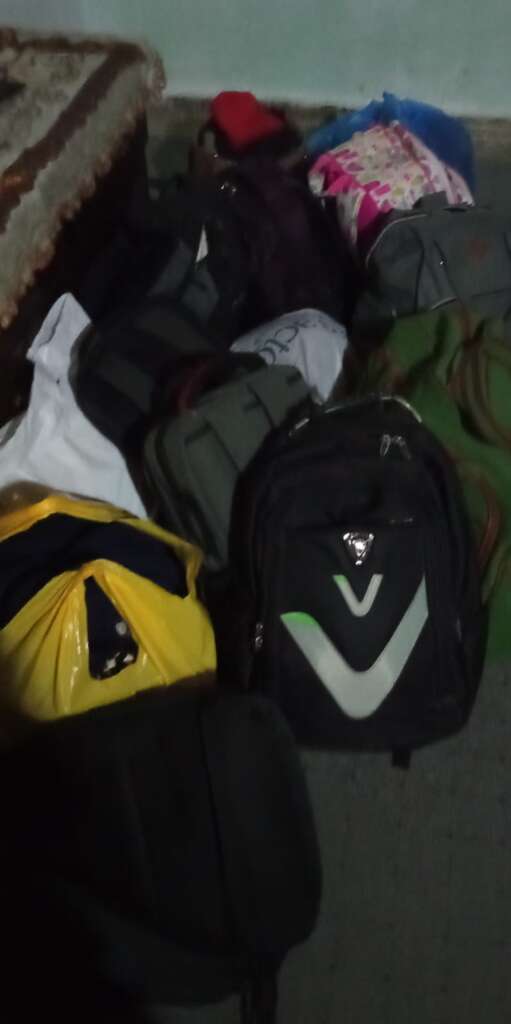
My eyes drifted to the door. Beside it, bags my mother had prepared in case of sudden displacement seemed to whisper to me: You don’t know how long you’ll have the luxury of sleeping in a room. They were a constant reminder: nothing is guaranteed, nothing remains the same. I stared at them, wondering how a person could carry their entire life in a bag, especially for a person who considers every little piece a precious treasure. There is no space for memories in these bags.
A headache gripped me, but something was missing: the buzzing. Panic rose. I curled into a fetal position, bracing for falling debris, closing my eyes. Exhausted, I wanted sleep, but my brain stayed awake.
One minute, two, five…
Suddenly, small stones rained onto my face and pillow. For a moment, I thought it was an earthquake. Fear froze me. Then came the crash of larger stones, debris scattering across the house. Terror consumed me. There had been no warning, no rocket sound. I pressed myself behind the door, trying to scream for my family, but no sound came out.
The unknown sound wouldn’t stop and I didn’t understand anything. What was happening? Was our house targeted?
From the living room, I heard my sister Lena screaming one word over and over: “Mama… Mama… Mama…” Then silence. I couldn’t move and a second later I remembered that my father here in the same room, he is my only savior now, I turned to him, but he said nothing, his gaze fixed on the ceiling. I followed his eyes and saw it: chunks of stone crashing down. One massive piece landing directly on my pillow. I screamed until my voice no longer exist, but the sound of ” the unknown thing” was louder. I tried to run, but my feet wouldn’t move.
Lena’s voice rose again, then another heavy crash silenced her. My own scream tore out: “Mama, Lena, Abdullah, Noah!” But no one answered. I ran into the living room, my mind spinning with dread. The first thing I saw was my brother Abdullah, four years younger than me, lying motionless on the floor. I froze– was he dead? I called his name. He looked back, just as shocked, unable to move. My mother sat embracing our youngest brother, trying to soothe him though she herself trembled. Noah’s eyes were blank, frozen with terror.
I searched for Lena. She wasn’t there. In the kitchen doorway, rubble piled high. My sister Lena stood crying, shivering. I held her tight, trying to calm her, while inside I longed for someone to calm me, to tell me this was just a nightmare.
We gathered in the living room. The iron door jammed against the bombing’s force. Trapped, I thought we’d die without anyone ever finding us. My father managed to break it open. Outside, the sound of running feet, neighbors’ desperate pleas, our relatives calling who came to see what happened to us, and the red glow of an ambulance siren broke the darkness.
It was not our house directly targeted but our residential block.
Minutes later, a neighbor rushed in with her young nephew, both crying. My mother asked what had happened. Breathless, she said two of her nieces’ fates were unknown, martyred or injured. She left the boy with us and ran back out.
I thought: poor woman. She believes she left him in a safe place, but no place is safe.
The boy shivered, crying. I thought he was cold. I cleared rubble from a blanket and wrapped it around his small body. His eyes met mine— a look I will never forget, filled with loss too heavy for a child. “Why are you crying? Are you scared?” I asked. “My cousin… she was martyred. I saw her blood on the floor. The other… her head was open.”
I was silent. What could I give him but quiet empathy?
Soon after, my aunt’s husband arrived, telling us that my uncle’s house, just meters away on the same street, had been completely destroyed, only the walls remained. And he could not find them.
The boy’s aunt returned to take him, devastated. One of her nieces injured, the other martyred. She went again to search for the rest of her family. At the same time, my uncle and his wife entered, telling us how they had miraculously survived.
Hours passed. My mother urged us to sleep. Everyone else drifted off, but I couldn’t. The thought of lying down terrified me. I stayed seated, alert, though I didn’t know how to prepare for what might come.
I watched my family sleep. The clock refused to move. I waited for morning to break this nightmare. Debris littered the house. I looked at my feet, touched them they—were still there, safe! I hadn’t lost them. Tears fell. We were alive.
The night was heavy, long, drenched in fear, grief, and fragile hope. Hope that morning might prove it had all been a nightmare.
When morning came, I stepped into the corridor. Rubble, broken stones, shards of glass everywhere. Every window shattered. The air reeked of ash and death. The streets were cloaked in grief. The silence was unbearable—not morning birdsong, but a silence that mirrored our loss. Even birds no longer dared to perch. This hour once belonged to life, children’s laughter, neighbors calling, streets alive with color.
Now, there was nothing. A coldness cut through even my thick clothes. My home, my neighborhood—no longer safe. I dragged my weary body back inside.
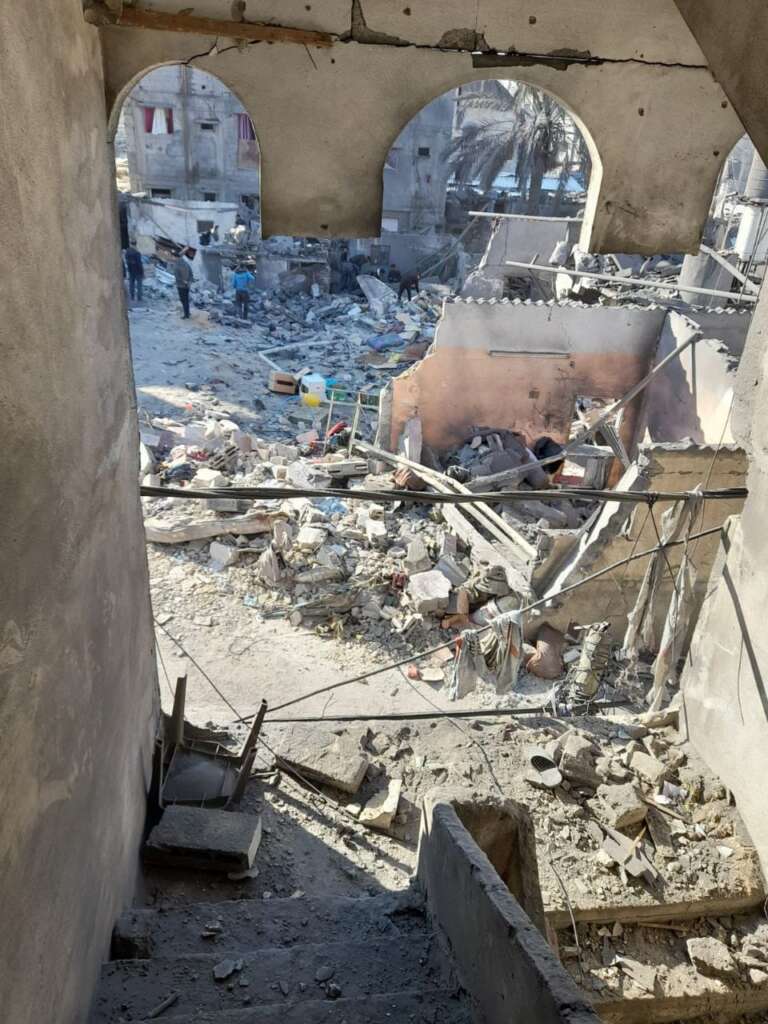
Our block was brutally bombed without warning. Around fifteen homes destroyed, thirty-one innocent lives were lost. Families torn apart. Among the martyrs was my father’s friend , who had been with him just fifteen minutes before the bombing.
One of our displaced neighbors lay buried under rubble all night with her children, watching them being martyred around her. One of them rested on her arm; she felt the blood from his head soaking into her skin, unsure if anyone could hear them. Water dripped on them until neighbors finally heard her daughter’s scream next morning and pulled them out. Five of her children were martyred. Some martyrs’ bodies remain unrecovered to this day, including her mother.
For days I couldn’t sleep at night. Panic rose with every sunset. I hated the night. My little cave became a place of terror; I couldn’t sleep in my room for months.
I thought the worst had passed. But that night was only a beginning. Massacres escalated. We were displaced not once, but twice, under bombardment, a tank stationed at our street’s end. I used to think I could endure anything except losing a family member; I feared losing my loved ones- then it happened. My brother was martyred by an Israeli missile. My nephew was shot in the head by an Israeli sniper. His mother’s heart is broken beyond repair.
I feared stepping outside, haunted by the drone’s buzzing. Every time my father or siblings left during the bombing, my heart stopped until they returned.
For two years, we lived all kinds of pain: loss, deliberate starvation, not knowing when the killer would deliver our death sentence. Horror lived with us in every second.
On 9 October, a ceasefire announced in Gaza—but it existed only on paper; no one could truly live it. The genocide never stops. Martyrs rise every day, and drones never leave. We are surviving, only with our bodies.
Survivors are usually seen as lucky in accidents and movies, but in the face of genocide, everything is completely different. We suffer from post-traumatic stress disorder.
The destruction caused by shrapnel has reached our memories as well, leaving them like a once-warm, beautiful house now deformed—turned into a source of pain. There is a scar on every side. Someone
dear was once part of this memory, but he is no longer there—erased, his place completely destroyed.
A lingering sense of nostalgia never fades. Even our beautiful memories have been taken from us.
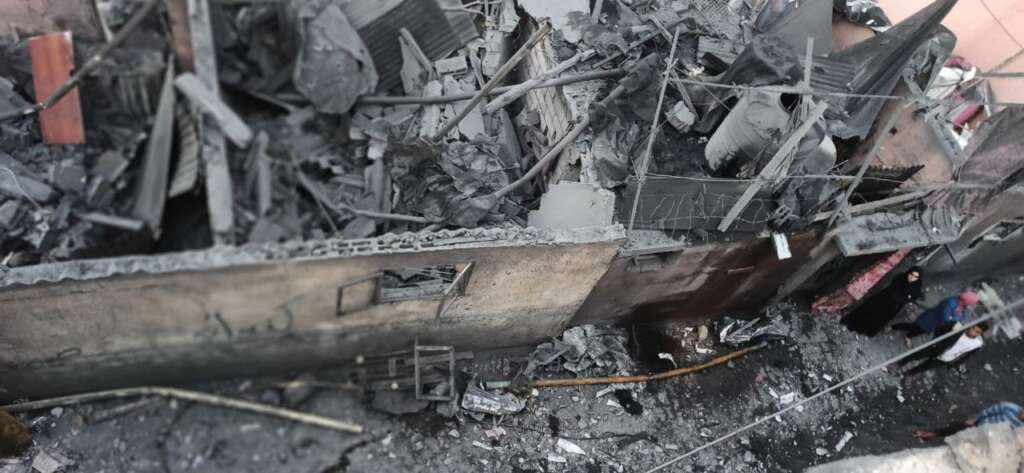
left without a home. Credit: Shrooq Abu Dahrooj
I once imagined my twenties as a time of growth, success, discovery. But instead, I am spending them in war and destruction, struggling just to hold onto a future. Where are Shrooq’s dreams? My graduation? My university?
Yet, there is a part of me that refuses to give up —clinging to life and fighting for whatever hope awaits at the end of the tunnel.
I wait for the day my soul can rest, when the running stops, my dreams take root, and my life blooms. I will never allow the butterfly spirit, by which everyone knows me, to be extinguished.
I wait for the day when my life is more than survival—when it is truly lived, and when I can finally enjoy all my human rights without being deprived of any of them.
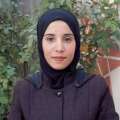
Shrooq Asaad Abu Dahrooj is a fourth-year English literature student at Al-Aqsa University in Gaza, also completing a concurrent educational qualification diploma. She writes to document lived experiences and share stories of resilience from her community.
Note: This project is supported by the British Council as part of the SARD programme, which focuses on the role of English and other languages in building resilience. SARD – Stories of Adversity, Resilience and Determination – encourages Palestinians, particularly young people, to share their stories and lived experiences through creative and educational media. The content of this production is solely the responsibility of Resilient Voices and does not necessarily reflect the views of the supporting or partnering institutions.

1 Comment
Eman Shayah
Dear Shorouq,
Your story carries both unbearable pain and extraordinary strength. The way you continue to hold onto hope, dreams, and love in the face of so much loss is deeply powerful. Even when everything is taken, your voice, your memory, and your resilience remain and they matter. One day, that butterfly spirit you speak of will not just survive, but truly fly.