
The night had not fully closed its eyes yet when the news in Rafah began to tremble through the air, whispering of a possible ground invasion if the negotiations failed. Still, we kept dressing our fear with a fragile kind of hope, holding on to any word that sounded a little less dark than the rest.
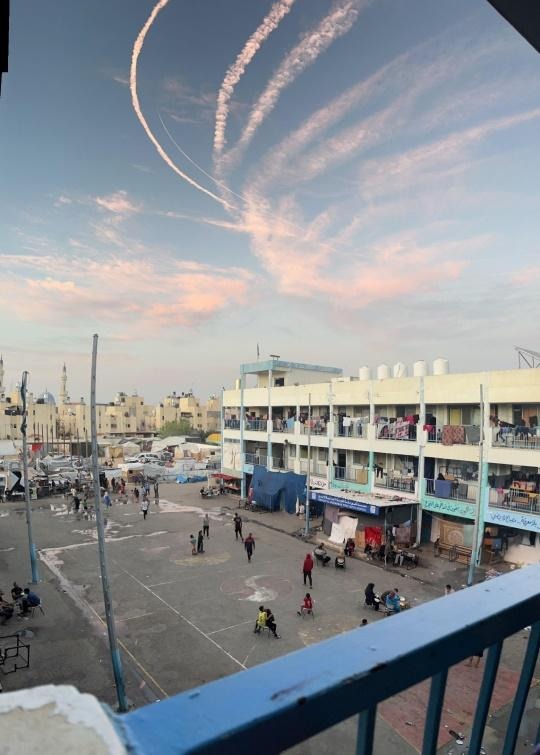
We were living in a school that had turned into a shelter. Four walls shared by thousands of people. Classrooms overflowing with families, courtyards filled with tents, and streets packed with endless rows of plastic and fabric. Everything around us whispered that this was not a home. It was only a long pause before running again.
Then, in a single night, everything flipped.
The rumors stopped being rumors.
The ground invasion became certain. Leaving Rafah became necessary.
I woke up at dawn to an unfamiliar noise, as if the entire school was rising as one giant, restless body. People were packing, folding tents, dragging bags, and preparing cars. In only a few hours, the place began to empty almost completely.
I stood behind the railing on the third floor, looking down at the yard that had been bursting with life just one day earlier. For the first time, I felt the full weight of displacement. It was a kind of exile that didn’t care about your story, even if you had already been uprooted four times before. A question slipped through my chest:
If only this were our return home instead of another escape, how different would the world look?
That day, half of my family left first, while my father, my sisters, and I stayed behind to follow the next morning. When my mother climbed into the car and I waved to her saying, “Bye, I’ll see you tomorrow,” something inside me cracked. I ran upstairs and collapsed into my sister’s arms, trying to swallow a sob that felt larger than the war itself.
The next morning, the school was turning into an echo.
The only sound left was the confusion of people, hurried footsteps, bags bumping against each other, cars loading and leaving. Everything was shaking under my feet.
Our kitchen was in a small tent downstairs because the classroom above us didn’t have enough space for anything. I made my morning coffee, more to hold myself together than to wake up. A small dark cup, warm between my trembling hands.
As I climbed the stairs, lost in my own daze, everything happened in a single heartbeat.
I bumped into a little girl who was running after her mother.
The cup flipped.
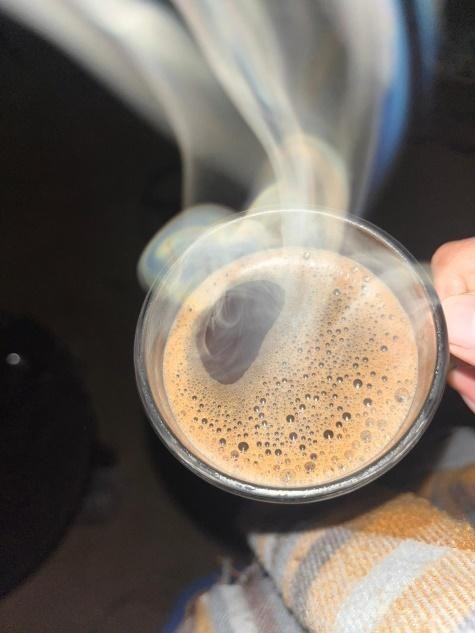
A small scream rose and the hot coffee spilled across her chest as if the war had chosen to pass through my hands this time.
I froze for a moment.
Then my mind erupted with noise.
“Water! Someone bring water! Please, hurry.”
I carried her in my arms, feeling her heartbeat burn against my skin even more than the coffee itself. I rushed her to the shelter’s clinic, shaking from the inside. Not from the accident, but from the sharp sting of realizing that harm had escaped from me even though I myself was exhausted, scattered, and stripped of everything.
The medic told us there were no bandages, no burn ointment, Nothing! Another slap from this world.
So I took my sister and rushed to the pharmacy.
Every step felt heavy, as if I were walking on my own guilt.
I brought whatever I could find and hurried back.
The girl finally calmed down, but something inside me remained unsettled.
I decided to go to the market to buy her candies, anything that could soften the day for her. But when I reached Al-Nas market, I barely recognized it.
The place that had been crowded to the point that walking was difficult just two days earlier was now nearly empty.
Displacement had swept everyone away.
I managed to find a few candies and returned.
I sat beside the girl, beside her mother, beside the wound I had caused unintentionally.
They were kind and understanding, which somehow made my guilt heavier instead of lighter.
I returned to finish packing our belongings.
Our car would arrive soon, and my hands were trembling again.
When the vehicle finally came, and we loaded our things, night had already taken over the sky.
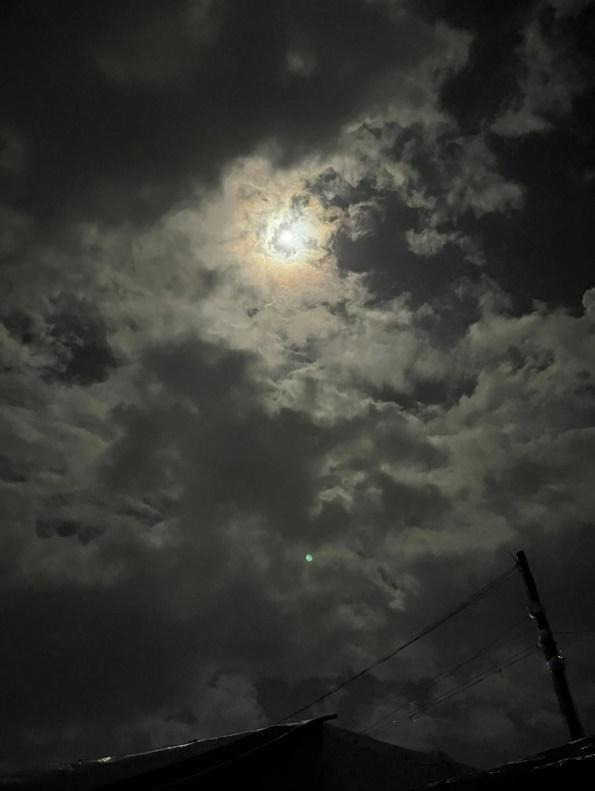
The sky held the most beautiful moon I had ever seen.
Full and bright, glowing through clouds that tried to hide it.
It felt like the moon was leaning toward me, whispering that there was still beauty left in the world even after all this pain and all these tangled feelings.
I got into the car, and the road swallowed us again.
Another displacement, leaving Rafah toward Al-Mawasi in Khan Younis.
But the moon stayed there behind the clouds, as if waving softly and saying:
Even if you burn and even if you cause a burn, you are still human. And the heart still carries its own kind of light, even in the darkest nights.
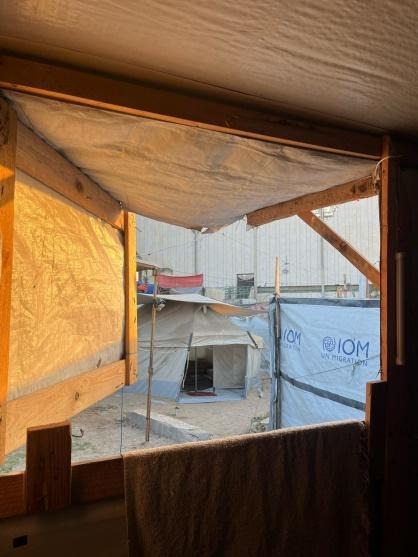
I often think about the little girl from the shelter
I hope she is safe and that her dreams survived everything we lived through
I didn’t see her again, but I carry her in my memories, but more importantly, in my heart.
About the Author
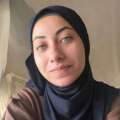
Shahd Al-Masri is a student from Gaza, studying English Language and Teaching Methods at Al-Aqsa University. This is her first attempt at writing a personal story, created during a time of displacement, in hopes of preserving a moment she did not want to lose.
Note: This project is supported by the British Council as part of the SARD programme, which focuses on the role of English and other languages in building resilience. SARD – Stories of Adversity, Resilience and Determination – encourages Palestinians, particularly young people, to share their stories and lived experiences through creative and educational media. The content of this production is solely the responsibility of Resilient Voices and does not necessarily reflect the views of the supporting or partnering institutions.