



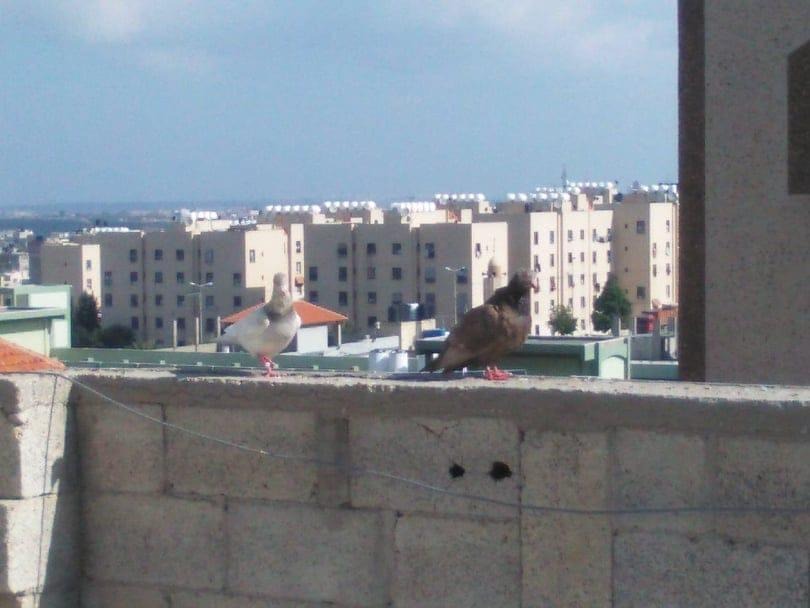
On an early morning of November, when the air felt refreshingly cool, I looked up at the sky. I could barely follow with my gaze the wings slicing sharply through the air—one pigeon clearing the way among the clouds for the flock behind. It looked more like dancing than flying, and I wondered to myself how my pigeons would recognize home in such a thick fog. Yet, I never imagined that even with this place so harshly disfigured, they would still instinctively find their almost unrecognized home.
Since the beginning of the war, my family had been waking up a little early—not notified by the school clock or the rhythm of the chirping of sparrows echoing against the horizon—but by Israeli forces serving the morning portion of their massive destructions. What was making a big difference was our growing anxiety about the intensity of daily bombardment.
We had stayed in our home for the first two months of the war, resisting as best we could. I had tried hard to stick to my routine as much as possible. Despite the disruption to my study, I had kept up my self-learning, hoping Israel’s rampage would soon die down, and considering education was the most powerful weapon that we, as students, should be armed with.
During the day one could see artillery shells flying overhead and finally crushing on Beit Lahia which was already covered with constant clouds of smoke, right before our eyes. Given the growing escalation outside, we had to stay on the alert for any unexpected bombs or evacuation orders.
At noon on November 2nd, we experienced a warning missile which fell into the neighboring garden— about which we were notified two hours later, by a passerby. All targets seemed close, heavily shaking the house, and densely filling the air with gunpowder and smoke.
Most of the neighborhood had been evacuated a long time ago, and the remaining families sought shelter at Al-Indonesian hospital—a refuge near our home—for the night. We saw children running back and forth each day, carrying blankets and pillows. The first night after the alarm passed swiftly, and a cautious calm prevailed. Even when the whirring of drones and the deafening explosions were inaudible, it left us with a feeling of unease and uncertainty.
The calm before the storm was how the second night of warnings turned out. My mother unexpectedly asked to have dinner early that evening, as if she had a premonition that this night would be the longest and most dreadful ever. We sat shattered, listening to the news on the radio, waiting for the Ishaa’ prayer to eventually surrender to sleep before the late party would start.
Israeli military aircraft would not grant us even moments of rest or peace. In an instant, a flash of red warning light pierced every corner of the house, followed by a series of extensive bombs. One scream was inaudible amidst the deafening blasts. That was when we realized—we were the target of these merciless airplanes. Our only shield was a mere corner of the room. Bricks rained down from the collapsing walls. We held each other tightly, whispering the “Al Shahada,” as if it was our last moment, the last breath we would take. The twenty seconds the firestorm lasted felt like destiny. Afterwards, reluctantly, we opened our eyes to a dim light. We couldn’t fully grasp the situation. Outside there were noises in the street, crowds with flashlights heading to the only standing house. By the grace of God, we survived unscathed. We rushed to the hospital barefoot under the shade of the night and the shock of surviving.
Witnessing the deterioration of hospital conditions sharpened my vision of the magnitude of misfortune war can bring. Upon arrival, we resorted to a side alley leading to the ICU. We rested our backs against the fence. Our bodies were in agony; our feet barely held us up.
In that moment, I preferred to surrender to the pain and fall into a coma rather than endure the sleepless, cold night lost in thought. I couldn’t help but think how a few minutes could determine our fate, changing everything. Minutes before, I might have been lying in my comfortable bed, gazing at the shaking ceiling or calmly sleeping in loosely tied white cloth—destined to be buried in the soil, my eternal bed—or perhaps it would be better to sleep on the filthy floor of the hospital, stained with blood, heavy with the scent of death, with no fragile shield from the sky, tracking the glowing spark of the horrific killing object whose roar still echoed in my ears and evoked an upsetting sense of fear. I thought briefly about my pigeons, and the despair they might be feeling, but everything else overwhelmed me, and the thought soon disappeared.
The glimmer of hope we held onto soon faded during the fourteen days we spent at the hospital, where we witnessed the exacerbation of vicious atrocities committed by Israeli forces, with no sign of a breakthrough in negotiations. Whenever people stood on the brink of despair and hopelessness, rumors would spread about a possible deal, causing residents to chant, whistle, and clap—pleasure overwhelming them momentarily before sinking back into profound sadness.
The hospital had long been overwhelmed, crowded with the wounded, the dead, and the displaced, all seeking refuge under the same collapsing roof.
One early morning, we resolved to make a sacrifice. The situation at the hospital had become unbearable, and the threat of being besieged was imminent. The same violations that had occurred at Al-Shifa hospital might be repeated at Al-Indonesian, with rumors of military vehicles advancing toward the hospital spread. Only the close and vicious blasts confirmed the suspicions. From behind the hospital wall, we could hardly hear the explosions over the crowd’s noises, yet we observed their brutality on rubble and flesh. The whole building kept trembling as if it might collapse at any second; injuries accumulated. Amid this tension, patients moved their beds into the hallways, abandoning the privileges of their status, believing it would be safer.
Given that the hospital had become an epicenter of disease rather than an adequate shelter, the decision to flee South was no longer an option but a necessity. Even if we survived the attacks, we wouldn’t survive the epidemics if we stayed there any longer. With no time to waste, we hurriedly packed our belongings. We were prohibited from reaching home, meters away, to collect anything. Anyone stepping into that territory would be an easy target for drones. Being forced toward such doom was only a matter of time, yet no one realized that such an action, motivated by the instinct of survival, would lead to deep regrets shortly after, just as it had for our ancestors seventy years ago.
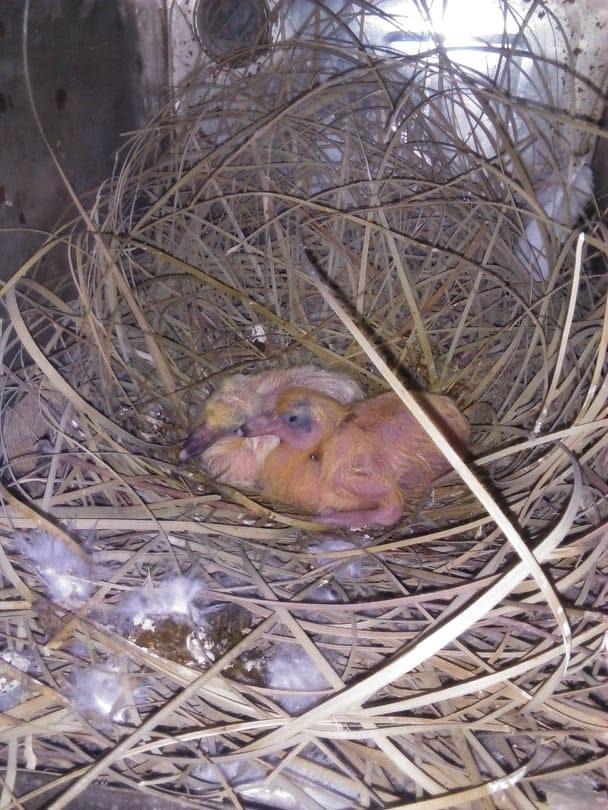
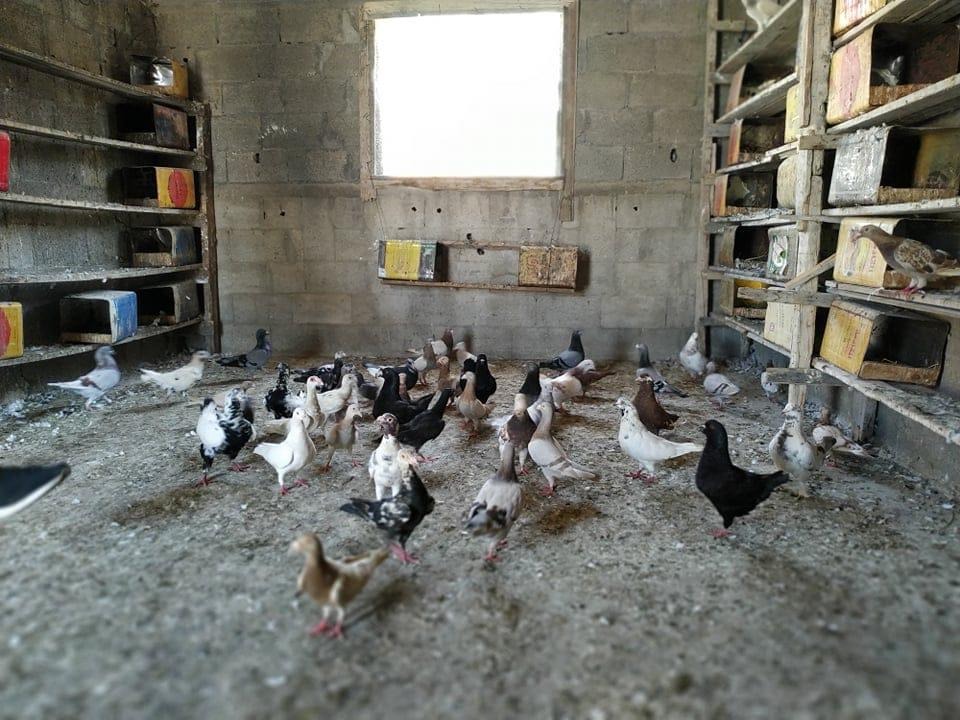
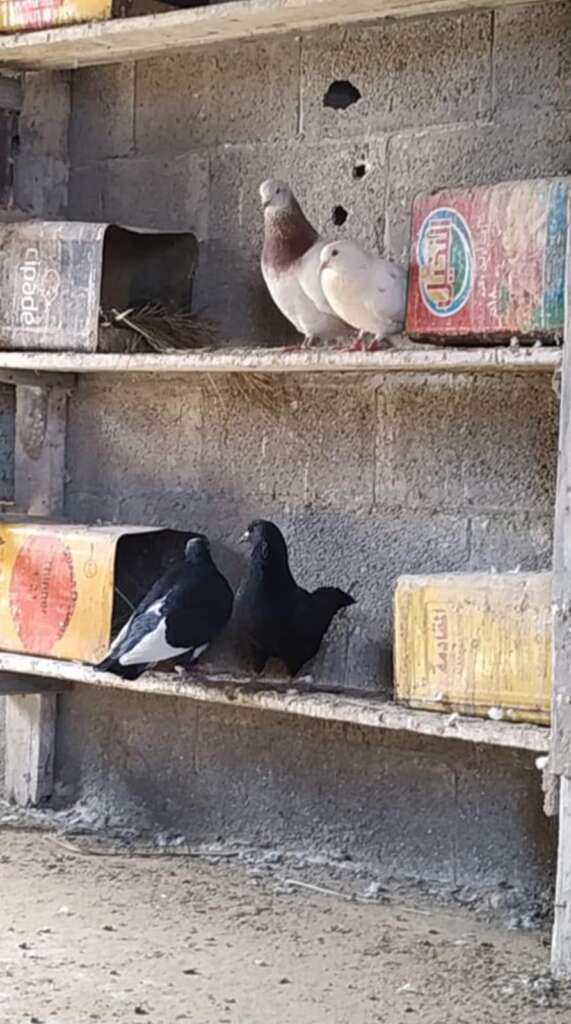
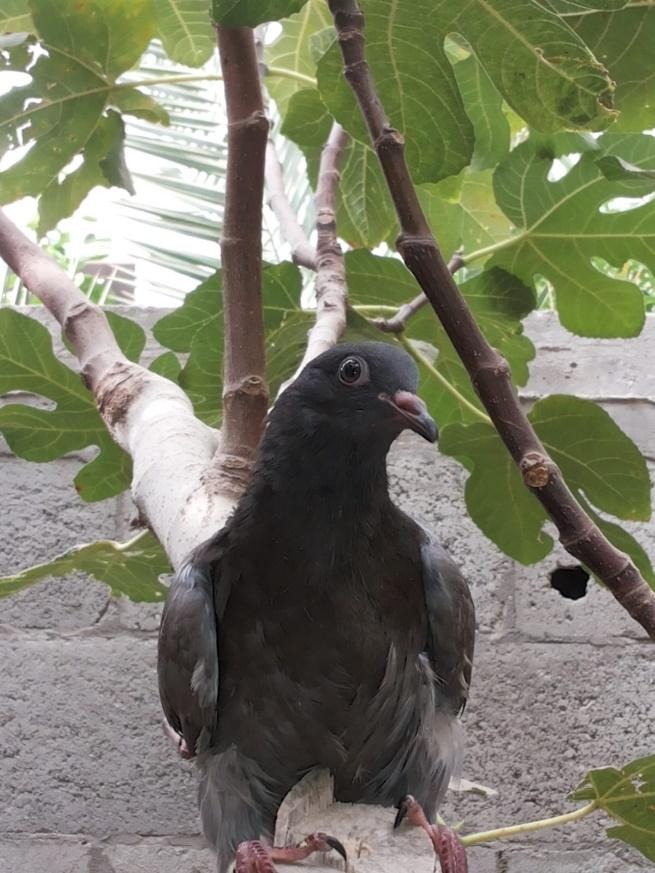
Who would have expected my beloved pigeons to endure hunger for over a month until I managed to return home during the ceasefire, only to find them perched on the stairs before our home’s broken door? Despite the harshness of the bombs and the hunger they endured, they preferred to stay where their freedom was respected and preserved—not intimidated by the prospect of certain death—while the entire sky was their homeland. They remained loyal to the hand that had fed them, to the home they had belonged to, and to the family they had built. I would love to see them flying away, fleeing the war to a safe place where they could breed and raise generations who only know the way back home—so that we might have ones to pass down the customs and heritage of our own.
*************
Noor Alhinnawi is a Palestinian writer from Gaza, learnt through war, and she knew how to weaponize pain and make an echo from silence, narrating a chapter of her life marked by challenge and resistance.
Note: This project is supported by the British Council as part of the SARD programme, which focuses on the role of English and other languages in building resilience. SARD – Stories of Adversity, Resilience and Determination – encourages Palestinians, particularly young people, to share their stories and lived experiences through creative and educational media. The content of this production is solely the responsibility of Resilient Voices and does not necessarily reflect the views of the supporting or partnering institutions.

5 Comments
Abeer
برافو ي نورتي
Manar
بالتوفيق حبيبتي
ما شاء الله عنك ❤️
Anwar
بالتوفيق ان شاءالله
Khawla
A wonderful narration of painful events.
We hope for an end to all this suffering and to return to our beautiful days, and for the birds to return as they once were—flying freely and singing melodies that delight us.
Wishing you continued success always, my dear Noor.
Mahasen
مبدعة تبارك الله 🫶🏻💚