
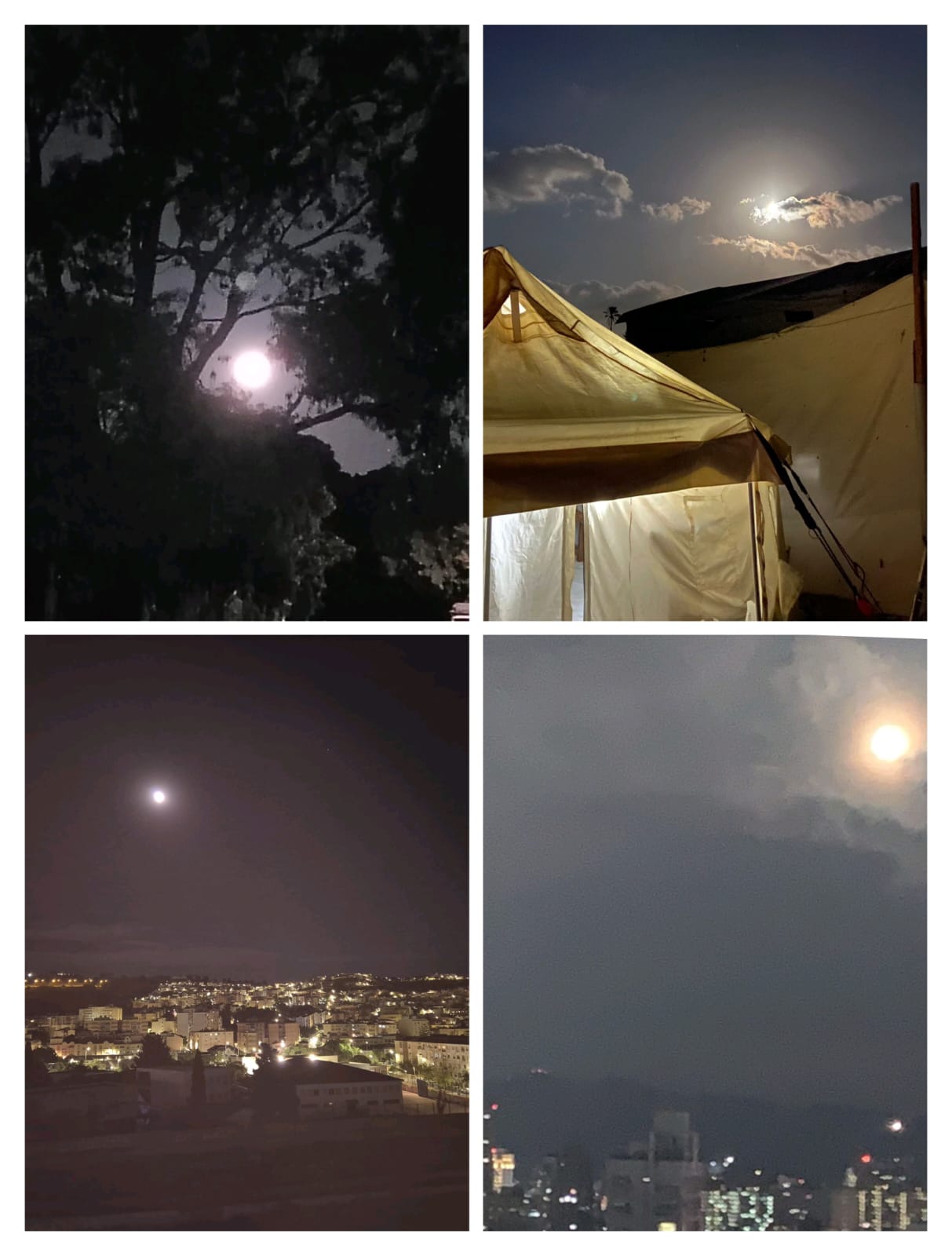
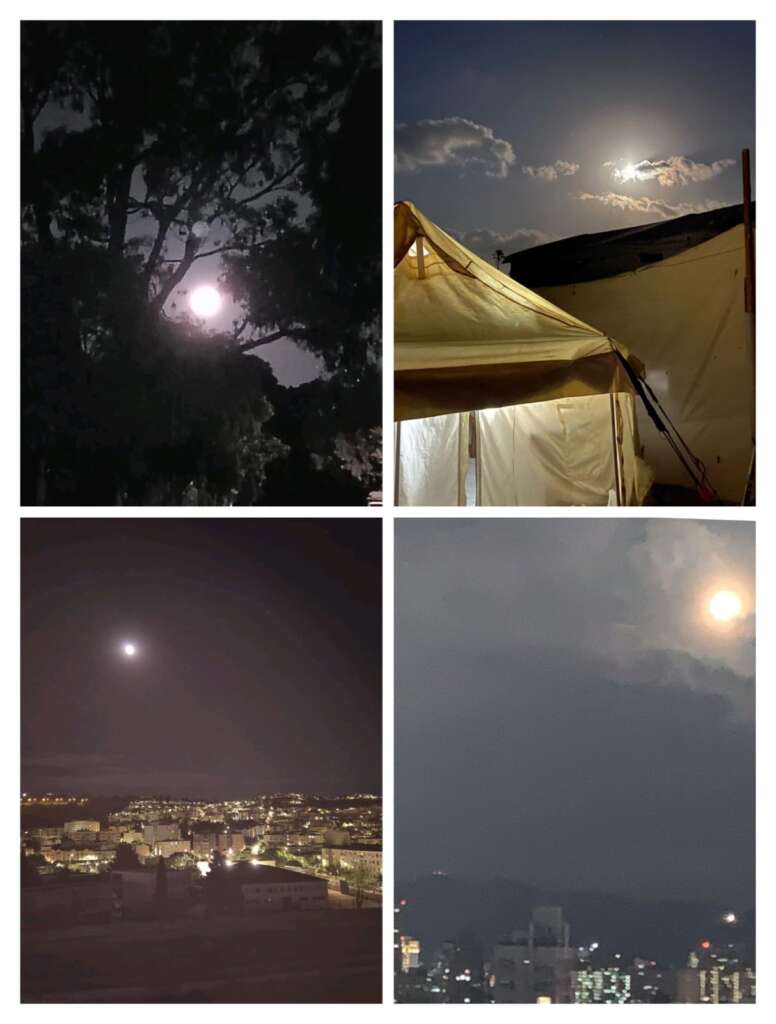
One image which I treasure from my involvement with “Resilient Voices” is this collage of the moon – as seen by myself and the other tutors (Taipei, Gerhard; Malaga, Auxi; Fremantle, me) and from one of the camps in Gaza. The moon is at once a symbol of our common humanity, and a poignant reminder of the ongoing hardship endured by those we have come to know and cherish during the project. For months, we met in the virtual equality of Zoom, at the same time knowing that behind the screen, those joining us from Gaza were facing a different reality: terror, starvation, grief, loss. Your lives, like the moon, so tantalizingly close and, at the same time, impossibly remote. And the moon too, reflecting back those familiar hardships – as In Marah’s account of her young neighbor, Misk, gazing up at the moon and crying: “Our moon is so thin—just like us. I want a fat moon like the other kids in the world. And I want to be fat and beautiful like them too.” In the mouths of children.
Yet, out of that darkness that you and your families have been plunged into, you have also shone. Our meetings have been full of joy and the stories that have emerged from the project have been a testament to the courage, humanity, and love of each and every one of you: love for your parents, your friends, your homes – love for life itself. It is this love, most of all, that has been the core of the resilience that you have shown; and it is that same love which transfuses each thread of each narrative. We have been privileged to have been the first to see, read, and hear your “Resilient Voices” – I’m sure we won’t be the last.
Note: This project is supported by the British Council as part of the SARD programme, which focuses on the role of English and other languages in building resilience. SARD – Stories of Adversity, Resilience and Determination – encourages Palestinians, particularly young people, to share their stories and lived experiences through creative and educational media. The content of this production is solely the responsibility of Resilient Voices and does not necessarily reflect the views of the supporting or partnering institutions.